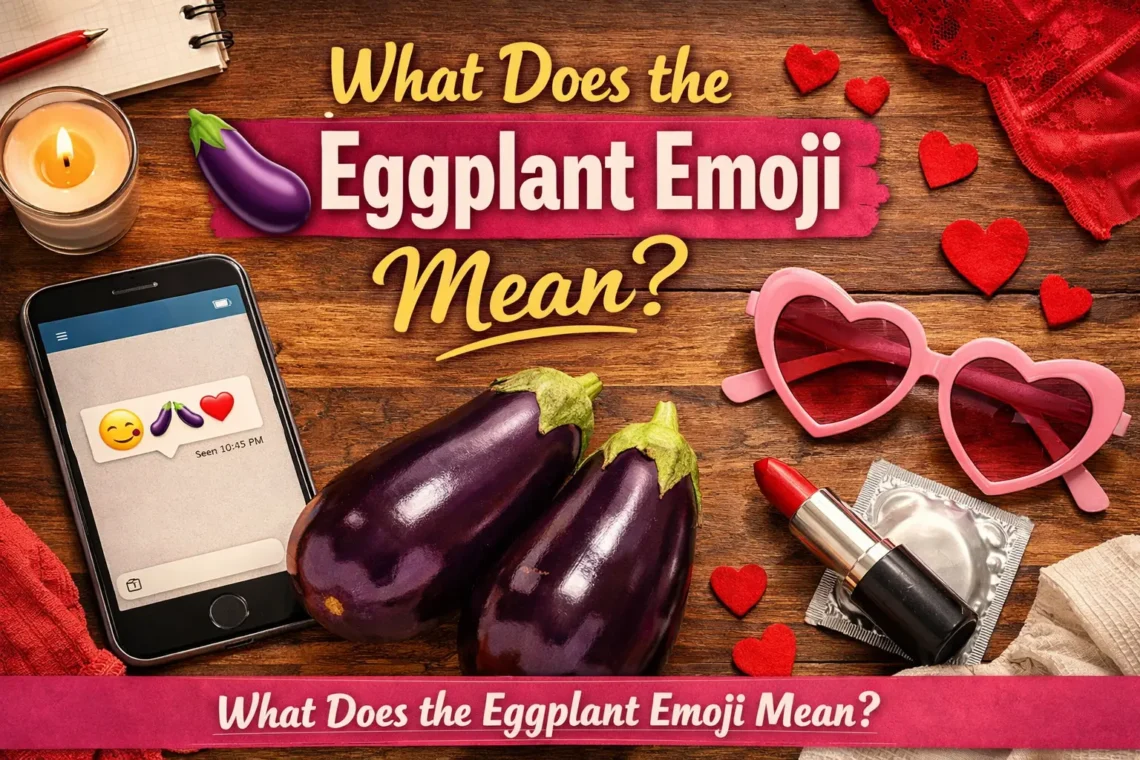
Emojis are everywhere. We use them in texts, social media posts, comments, and even emails. But some emojis don’t mean what they show on the screen. One of the most misunderstood emojis is the 🍆 eggplant emoji.
So, what does the eggplant emoji mean in text messages and online chats?
At first glance, it looks like a simple vegetable. But online, it often carries a very different meaning. Many teens, young adults, and social media users use it as slang. Others accidentally use it and get embarrassed.
In this article, we explain the real meaning of the eggplant emoji, how it’s used, where it’s risky, and when you should avoid it. We’ll cover texting, social media, dating apps, and professional communication—clearly and honestly.
Let’s break it down 🍆
Definition & Meaning of the Eggplant Emoji
The eggplant emoji 🍆 has two main meanings, depending on context.
1. Literal Meaning (Safe & Innocent)
At its most basic level, the eggplant emoji represents:
- A vegetable
- Food
- Cooking
- Gardening
- Healthy eating
Example:
“Making pasta tonight 🍆🍝”
This usage is rare in casual texting but still valid.
2. Slang Meaning (Most Common)
In texting and online culture, the eggplant emoji is widely used as a sexual symbol.
Slang meaning:
- A symbol for the male private part
- Used to suggest sexual attraction or adult content
Example:
“I miss you 🍆😏”
Key Points to Remember:
- The slang meaning is very common
- Context makes all the difference
- Often paired with 😏 💦 🔥 or 😈
- Mostly used in casual, flirty, or adult conversations
Background & History of the Eggplant Emoji
The eggplant emoji was added to Unicode in 2010 as part of early emoji sets. It was meant to represent food—nothing more.
How Did It Change Meaning?
Over time, internet users noticed:
- The shape resemblance
- The color
- The playful nature of emojis
Social media platforms like:
- Twitter (X)
- Snapchat
- Tumblr
helped turn 🍆 into a visual slang symbol.
Cultural Impact
- Memes spread the meaning fast
- Youth culture adopted it
- Dating apps normalized its usage
- It became a pop-culture symbol
Today, the slang meaning is more common than the literal one.
Usage in Different Contexts
The meaning of 🍆 changes based on where and how it’s used.
Texting
In private messages, the eggplant emoji often implies flirting or sexual intent.
Example:
“You coming over tonight? 🍆😉”
Social Media
On platforms like Instagram and Twitter:
- Used in comments
- Used in captions
- Often part of jokes or memes
Example:
“Gym progress 🍆💪”
Casual Chats
Between close friends, it may be used jokingly.
Example:
“This emoji ruined vegetables forever 🍆😂”
Context Table
| Platform | Meaning | Risk Level |
|---|---|---|
| Text Messages | Sexual or Flirty | Medium |
| Social Media | Joke or Suggestive | Medium |
| Dating Apps | Sexual Interest | High |
| Work Chats | Inappropriate | Very High |
Professional Communication
Using the eggplant emoji in professional settings is not recommended.
Why It’s Risky
- Often seen as inappropriate
- Can be misunderstood
- May violate workplace policies
- Can damage your reputation
Where to Avoid It
- Work emails
- Slack or Teams chats
- Client messages
- LinkedIn posts
Safer Alternatives
Instead of 🍆, use:
- Words instead of emojis
- Neutral emojis like ✅ 📌 📊
- Professional tone always
Rule of thumb:
If you wouldn’t say it in a meeting, don’t emoji it.
Hidden or Offensive Meanings
The eggplant emoji can be offensive or uncomfortable in the wrong context.
Why Context Matters
- Age differences
- Cultural differences
- Professional boundaries
Risky Examples
“Great presentation 🍆” ❌
“Nice job today 🍆🔥” ❌
Safe Examples
“Cooking eggplant tonight 🍆🥘” ✅
“Garden harvest 🍆🌱” ✅
Always think before you send.
Usage in Online Communities & Dating Apps
The eggplant emoji is very common on dating platforms.
Dating Apps (Tinder, Bumble, etc.)
- Often signals sexual interest
- Can feel too forward
- May turn some users off
Example Dialogue:
Alex: “Hey, how’s your day?”
Sam: “Good so far 🍆😉”
Some people see this as playful. Others see it as rude.
Online Forums & Communities
- Used in memes
- Used ironically
- Often censored or moderated
Tip: If you’re unsure, don’t use it.
Comparison with Similar Emojis
| Emoji | Meaning | Tone |
|---|---|---|
| 🍆 | Sexual symbol | Explicit |
| 🍑 | Body reference | Suggestive |
| 💦 | Sexual implication | Explicit |
| 😏 | Flirty | Mild |
| 🔥 | Attractive / hot | Safe-ish |
Key Insight:
🍆 is one of the strongest adult-coded emojis.
10 Slang Uses Involving the Eggplant Emoji
- 🍆😏 – Flirting
- 🍆💦 – Explicit sexual meaning
- 🍆🔥 – Sexual attraction
- 🍆😂 – Joke or meme
- 🍆👀 – Suggestive interest
- 🍆➡️🏠 – Hookup implication
- 🍆📸 – Risky / adult content
- 🍆🙈 – Embarrassing humor
- 🍆🤦 – Regret joke
- 🍆💬 – Innuendo in chat
How to Respond to the Eggplant Emoji
Your response depends on comfort level.
Casual Response
- “😂”
- “Lol”
- “You’re wild”
Flirty Response
- “😏”
- “Maybe”
- “Haha, bold”
Professional Response
- Ignore it
- Change topic
- Use words, not emojis
Privacy-Focused Response
- “Let’s keep it respectful”
- “Not my vibe”
You’re always allowed to set boundaries.
Regional & Cultural Differences
Emoji meanings can change across cultures.
Western Countries
- Strong sexual meaning
- Widely understood slang
Asian Cultures
- More literal usage
- Food-based meaning still common
Middle Eastern & Conservative Cultures
- Often considered inappropriate
- May cause offense
Important:
Never assume everyone sees emojis the same way.
FAQs
Q1: Is the eggplant emoji always sexual?
No, but most people interpret it that way online.
Q2: Can I use it in food posts?
Yes, but expect jokes or reactions.
Q3: Is it appropriate at work?
No. Avoid it completely.
Q4: Why do people use it instead of words?
Emojis feel playful and indirect.
Q5: Can it get you banned on platforms?
In some communities, yes.
Q6: Is it safe to send first?
Only if you know the person well.
Conclusion
So, what does the eggplant emoji mean? While it started as a simple vegetable emoji, it has become a widely recognized slang symbol with sexual meaning in texts, social media, and dating apps. Context, platform, and audience decide whether it’s playful, risky, or inappropriate. Using it casually with friends may be fine, but in professional or unfamiliar settings, it can lead to misunderstandings. The safest approach is awareness. When in doubt, skip the emoji and use clear words. Smart communication always beats confusion.