If you live in or have visited areas with distinct seasons, you may have heard the term “stick season” and wondered what it means. It sounds unusual and a little poetic, but it actually describes a very specific time of year.
This guide explains what stick season is, why people use the term, where it’s common, examples of usage, similar seasonal slang, and even a fun mini quiz. By the end, you’ll know exactly how to use “stick season” in conversation, writing, or social media posts.
Quick Answer:
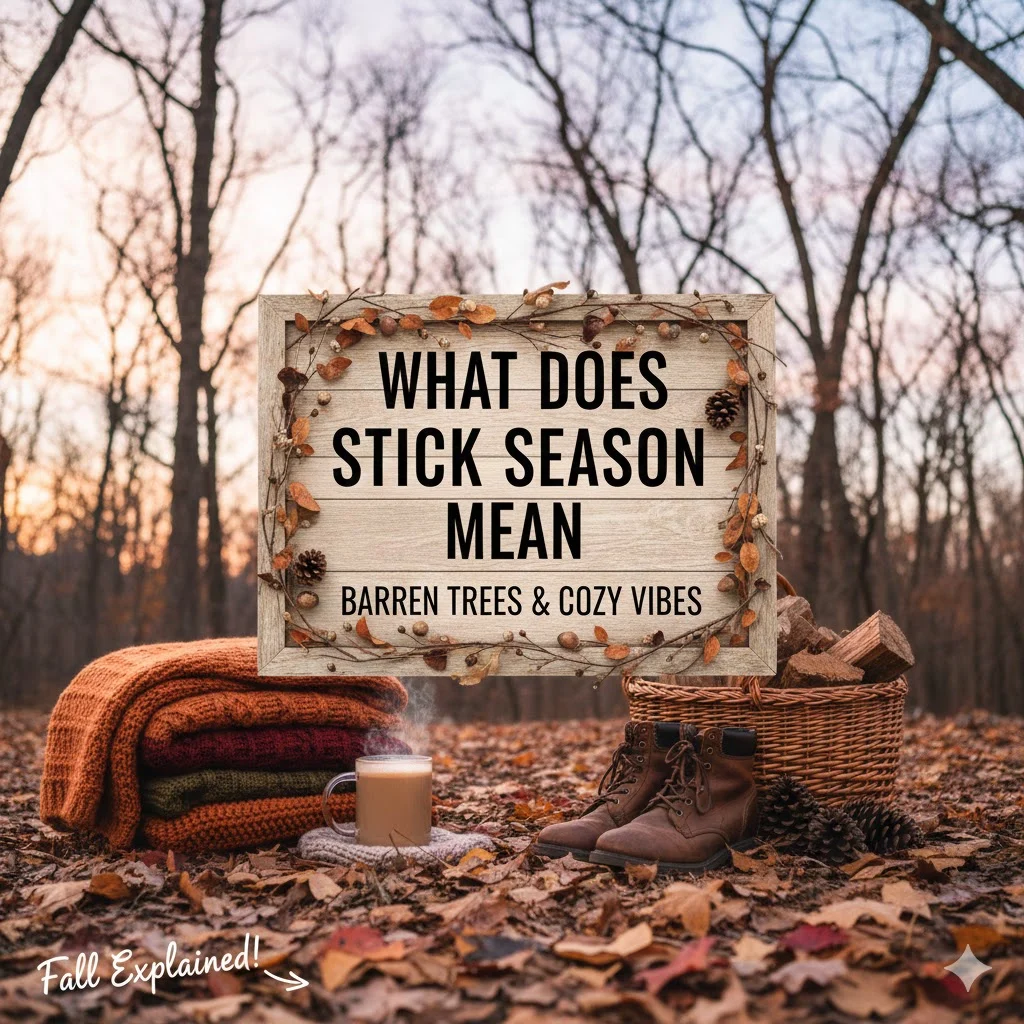
Stick season refers to the late fall period, after the leaves have fallen but before the first snowfall. It’s often described as bare trees, gray skies, and quiet landscapes, evoking a slightly melancholic yet peaceful feeling.
🧠 What Does Stick Season Mean?
Stick season is a New England term (U.S.) that describes the time when trees are bare, usually late October to November, depending on the region.
Example in a sentence:
“I love hiking in stick season — the forest feels quiet and peaceful without the leaves.”
In short:
Stick season = Late fall with bare trees = Between autumn leaves and winter snow
It’s not a formal term, but it’s widely used by locals and writers to capture a mood rather than a strict calendar date.
🌍 Origin and Popularity of Stick Season
- Region: Primarily New England, but the concept applies anywhere with deciduous trees and snowy winters
- Cultural Use: Often in blogs, travel posts, photography, and regional social media
- Why It’s Called That: Trees look like sticks when they’ve lost their leaves, giving the landscape a stark, skeletal appearance
- Mood/Feeling: Melancholic, reflective, cozy, and sometimes eerie
Stick season has gained attention online as photographers, hikers, and writers share images and experiences of this bare-tree period. It has a niche but passionate following on Instagram, TikTok, and Pinterest.
📱 Where Is Stick Season Commonly Used?
- 🌲 New England states – Vermont, New Hampshire, Maine, Massachusetts
- 📸 Instagram & Pinterest – for autumn photography and nature posts
- 💬 Social media captions – “Enjoying stick season vibes 🍂”
- ✍️ Blogs and travel posts – describing seasonal scenery
- 🎨 Art & aesthetics communities – autumn and minimalism content
Tone: Casual, reflective, poetic
Not suitable: Formal writing, work emails, or professional documents
💬 Examples of Stick Season in Conversation
- A: Did you hike this weekend?
B: Yeah, stick season makes the trails so quiet 🍂 - A: When’s the best time to visit Vermont?
B: Stick season! Bare trees, crisp air, perfect for photos - A: I miss fall already
B: Stick season vibes 😌 - A: Should we go camping this month?
B: Perfect timing, it’s stick season now - A: I hate when leaves are gone
B: Stick season is kinda beautiful though, all stark and peaceful - A: Love the Instagram photos you posted!
B: Thanks! Stick season is the best for forest shots 🌲
🕓 When to Talk About Stick Season
✅ When to Use
- Describing late-fall scenery
- Writing blogs, captions, or travel guides
- Posting photography from forests, mountains, or rural areas
- Social media posts with reflective or melancholic tones
- Discussing seasonal feelings with friends
❌ When Not to Use
- Work emails or professional communication
- Academic or historical reports (unless discussing local culture)
- Early fall or winter posts (term is season-specific)
- With people unfamiliar with the term without context
- Formal event descriptions
Comparison Table
| Context | Example Phrase | Why It Works |
|---|---|---|
| Social Media | “Stick season hikes are magical 🍂” | Casual, poetic, reflective |
| Travel Blog | “Visiting New Hampshire during stick season” | Informative, descriptive |
| Work Email | “Project update due Friday” | Professional, clear |
| Personal Chat | “Love the stick season vibes” | Casual, friendly |
| Photography Post | “Stick season in the mountains 🌲” | Poetic & aesthetic |
🔄 Similar Seasonal Terms or Alternatives
| Term | Meaning | When to Use |
|---|---|---|
| Leaf-fall | When leaves fall | Early autumn |
| Late Autumn | Last part of fall | Formal or descriptive |
| Bare Trees | Trees without leaves | Photography / poetic captions |
| Pre-winter | Before snow arrives | Broad geographic use |
| Golden Fall | Peak colorful leaves | Early to mid-autumn |
| Frosty Mornings | Early cold before snow | Seasonal writing |
🙋♂️ FAQs About Stick Season
1. Is stick season a real season?
It’s not official, but it’s widely recognized by locals in regions with deciduous trees.
2. Where is stick season mostly observed?
New England (Vermont, New Hampshire, Maine, Massachusetts), but applies to any area with bare deciduous trees before winter.
3. Why is it called stick season?
Because trees look like sticks after losing their leaves.
4. When does stick season happen?
Typically late October to November, before the first snow.
5. Can stick season be used in social media captions?
Absolutely! It’s popular for reflective or aesthetic posts.
6. Is stick season considered beautiful?
Yes, it’s appreciated for its quiet, stark, and peaceful beauty.
7. Does stick season have a mood or vibe?
Yes, it evokes reflective, cozy, melancholic, and sometimes eerie vibes.
📝 Mini Quiz – Test Your Knowledge
1. What does stick season refer to?
a) Summer hiking
b) Late fall with bare trees ✅
c) Winter snowstorm
2. Where is stick season most commonly used?
a) New England ✅
b) Southern California
c) Texas
3. Why is it called stick season?
a) Trees are decorated with sticks
b) Trees look like sticks after losing leaves ✅
c) It’s the time to collect sticks
4. Which months typically feature stick season?
a) April–May
b) Late October–November ✅
c) January–February
5. What kind of vibe does stick season convey?
a) Festive
b) Reflective, melancholic ✅
c) Hot and tropical
📝 Conclusion
Stick season is a unique and poetic term for the period between autumn leaves and winter snow, mainly in New England but relevant anywhere with deciduous trees. It’s a season appreciated for its quiet beauty, stark landscapes, and reflective vibe. Now you can confidently use “stick season” in conversations, social media captions, or travel writing, and fully appreciate its poetic charm.