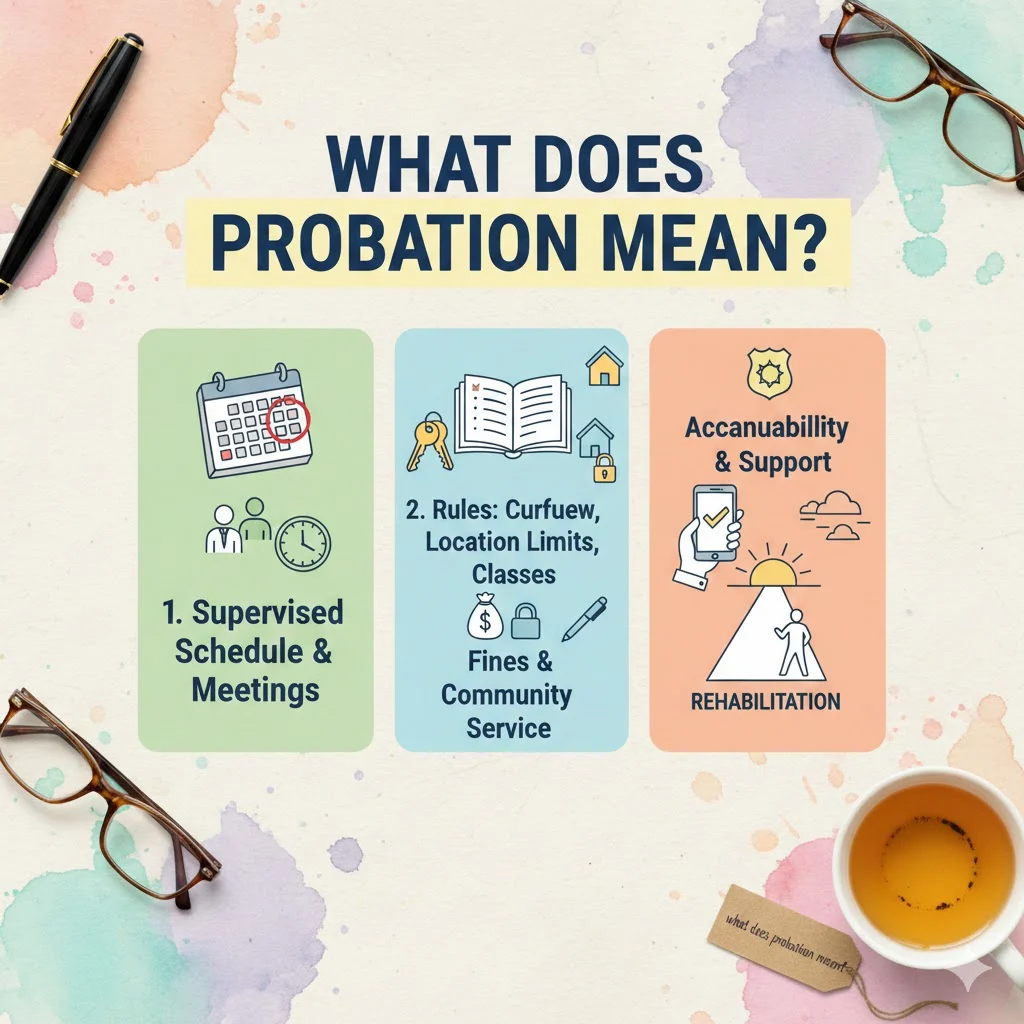
The word probation is used in many areas of life, yet it often causes confusion. You may hear it in court cases, at work, in schools, or even in everyday conversations. Many people immediately connect probation with punishment, but that is only part of the story.
So, what does probation mean exactly?
In simple terms, probation is a trial or observation period. It is a time when someone’s behavior, performance, or actions are closely monitored. The goal is not always punishment. In many cases, probation is actually a second chance.
In this guide, we will explain the meaning of probation in clear, easy language. You will learn how probation works in law, jobs, schools, and daily life. We’ll also cover rules, examples, pros and cons, and common misunderstandings. By the end, you’ll fully understand what probation means and why it matters.
Definition of Probation
Probation means a temporary period of supervision or evaluation where someone must follow specific rules or conditions.
At its core, probation involves three key ideas:
- Monitoring
- Rules or conditions
- A chance to improve or prove responsibility
Probation can apply to different situations:
- Legal cases
- Employment
- Education
- Housing or contracts
Simple Definition
Probation is a test period to check behavior or performance before making a final decision.
What Does Probation Mean in Law?
In legal terms, probation is a court-ordered alternative to jail or prison. Instead of serving time behind bars, a person is allowed to live in the community under supervision.
Key Points of Legal Probation
- The person is not free from consequences
- Rules must be followed strictly
- A probation officer may be assigned
- Violations can lead to jail time
Common Probation Conditions
- Regular check-ins with an officer
- No criminal activity
- Drug or alcohol testing
- Travel restrictions
- Community service
Example
“The judge sentenced him to two years of probation instead of prison.”
This means the court is giving the person a chance to reform.
Types of Legal Probation
There are several types of probation, depending on the case.
1. Supervised Probation
- Regular meetings with a probation officer
- Strict rules
- Common for serious offenses
2. Unsupervised Probation
- Fewer check-ins
- Still must follow laws
- Common for minor offenses
3. Juvenile Probation
- For minors
- Focuses on education and rehabilitation
4. Felony Probation
- More serious crimes
- Longer duration and stricter rules
What Does Probation Mean at Work?
In employment, probation refers to a trial period for new employees. It helps employers evaluate performance before offering permanent status.
Work Probation Explained
- Usually lasts 3 to 6 months
- Employee performance is reviewed
- Benefits may be limited
- Job security is lower
Why Companies Use Probation
- To test skills
- To assess attitude
- To reduce hiring risk
Example
“You’ll be on probation for the first three months.”
This does not mean punishment. It means evaluation.
Rules During Work Probation
Employees on probation usually must:
- Meet performance targets
- Follow company policies strictly
- Show punctuality and professionalism
- Accept feedback positively
Failure to meet expectations may result in:
- Extended probation
- Demotion
- Termination
What Does Probation Mean in School?
In education, probation is used when a student’s academic performance or behavior does not meet required standards.
Academic Probation
- Low grades
- Missed assignments
- Poor attendance
Behavioral Probation
- Disciplinary issues
- Rule violations
Example
“She was placed on academic probation due to low GPA.”
Probation in school is meant to help students improve, not punish them.
How Long Does Probation Last?
Probation length depends on the situation.
| Context | Typical Duration |
|---|---|
| Legal probation | 6 months to several years |
| Job probation | 1–6 months |
| School probation | One semester |
| Housing probation | 30–90 days |
Is Probation a Punishment?
Not always.
Can Be:
- A warning
- A second chance
- A rehabilitation tool
Is NOT:
- Immediate freedom
- Permanent status
- A guarantee of success
Vs Parole
Many people confuse these terms.
| Feature | Probation | Parole |
|---|---|---|
| Given instead of jail | Yes | No |
| Given after jail | No | Yes |
| Supervised | Yes | Yes |
| Court-ordered | Yes | Yes |
What Happens If Probation Is Violated?
Violating probation is serious.
Common Violations
- Missing meetings
- Breaking laws
- Failing drug tests
- Ignoring conditions
Possible Consequences
- Warning
- Extended probation
- Jail or prison
Can Probation End Early?
Yes, in some cases.
Early Termination Possible If:
- All conditions are met
- Behavior is excellent
- Legal approval is granted
This applies mostly to legal probation.
Probation in Everyday Language
Outside formal settings, probation can be used casually.
Examples
- “He’s on probation with his parents.”
- “This relationship feels like probation.”
In these cases, probation means being watched or tested.
Emotional Impact of Being on Probation
Probation can cause:
- Stress
- Anxiety
- Motivation to improve
Support and clarity help reduce pressure.
Advantages of Probation
- Second chances
- Learning opportunity
- Avoids harsh penalties
- Encourages responsibility
Disadvantages of Probation
- Limited freedom
- Constant evaluation
- Risk of consequences
- Emotional pressure
How to Succeed During Probation
Simple Tips
- Follow rules strictly
- Communicate clearly
- Ask for feedback
- Stay consistent
- Avoid risks
Probation success depends on discipline and responsibility.
Common Myths About Probation
- ❌ Probation means guilt (not always)
- ❌ Probation ruins your life (false)
- ❌ Probation is permanent (false)
FAQs About Probation
Q1: Does probation mean jail time?
No. Probation is often an alternative to jail.
Q2: Can probation be extended?
Yes, if conditions are not met.
Q3: Is probation bad for your record?
Legal probation may appear on records.
Q4: Can you travel while on probation?
Only with permission.
Q5: Is work probation normal?
Yes. It’s very common.
Q6: Can probation be removed?
Yes, sometimes early.
Conclusion
So, what does probation mean? It means being given a trial period under observation. Whether in law, work, or school, probation is designed to test responsibility and encourage improvement. It is not always punishment. In many cases, it is an opportunity to learn, grow, and prove reliability. Understanding probation helps reduce fear and confusion. If handled correctly, probation can lead to success instead of failure. The key is simple: follow the rules, stay focused, and use the chance wisely.
Discover More Related Article:-
- What Does It Mean When Your Nose Itches: Causes, Superstitions & Health
- What Does Stick Season Mean? 🍂 Full Meaning & Explanation