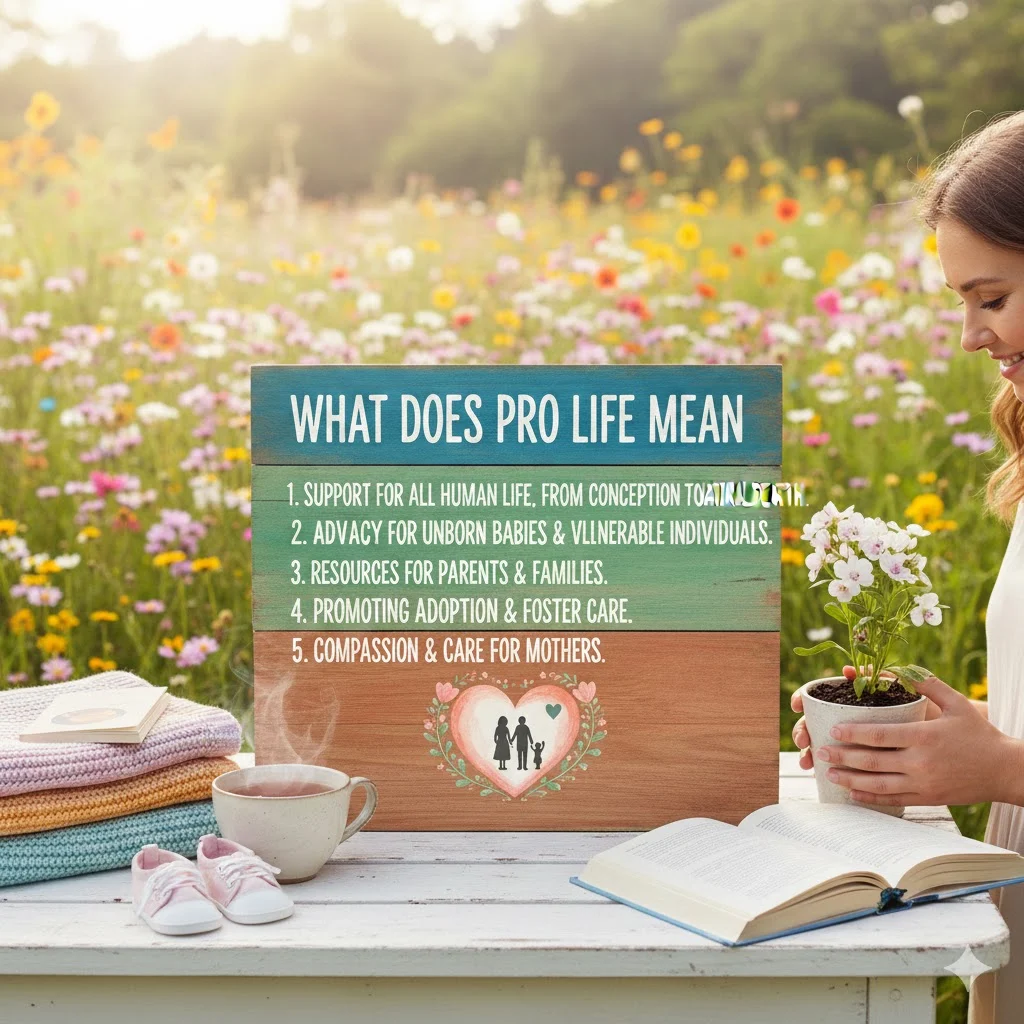
You may have seen the term “pro life” in conversations, news, or social media and wondered exactly what it means. Sometimes it pops up in text messages, captions, or debates, and it can feel confusing if you’re not familiar with it.
This guide explains what pro life means, its origin, real-life examples, where it’s used, similar terms, FAQs, and more. By the end, you’ll clearly understand the meaning, context, and usage of “pro life.”
Quick Answer:
Pro Life means supporting the protection of human life from conception, opposing abortion. It’s a serious and often political stance, used in discussions about ethics, healthcare, and law.
🧠 What Does Pro Life Mean?
The term pro life refers to a position that opposes abortion and sometimes euthanasia. People who identify as pro life generally believe that life begins at conception and should be protected at all stages.
Example in a sentence:
“She identifies as pro life and volunteers at a crisis pregnancy center.”
In short:
Pro Life = Supporting the protection of human life = Generally opposes abortion and related practices
Unlike casual slang, this term carries serious ethical, moral, and political weight.
🌍 Origin and History of the Term Pro Life
- First used: 1960s–1970s in the United States
- Context: Emerged during debates on abortion and reproductive rights
- Purpose: To describe individuals or groups advocating against abortion and for fetal life protection
- Modern usage: Widely used in politics, healthcare, and social media discussions
Cultural Note: The term “pro life” is often contrasted with “pro choice,” which supports the legal right to abortion.
📱 Where Is Pro Life Commonly Used?
- 📰 News Articles & Websites – Discussions on abortion laws and ethics
- 📱 Text Messages & Social Media – Opinions, debates, or personal beliefs
- 🏛️ Political Platforms – Party stances, campaigns
- 🏥 Healthcare & Advocacy Groups – Clinics, centers, volunteer work
Tone: Serious, ethical, political
Avoid: Casual joking, informal slang contexts
💬 Examples of Pro Life in Conversation
- A: What’s your stance on abortion?
B: I’m pro life; I believe every life is valuable. - A: Are you joining the march tomorrow?
B: Yes, as a pro life supporter. - A: What does pro life mean exactly?
B: It means advocating for the protection of unborn life. - A: Do you support legal abortion?
B: No, I’m pro life. - A: Have you read the article on pregnancy centers?
B: Yes, they’re mostly pro life organizations. - A: Can pro life people also support healthcare rights?
B: Absolutely, many focus on healthcare support for mothers and babies.
🕓 When to Use and When NOT to Use Pro Life
✅ When to Use Pro Life
- In serious discussions about abortion
- In political or ethical debates
- In informative articles or social media posts
- When volunteering or advocating for life-related causes
❌ When NOT to Use Pro Life
- In casual slang or jokes
- In irrelevant text messages or memes
- In professional communication unrelated to ethics
- To provoke or argue aggressively in casual chats
Comparison Table
| Context | Example Phrase | Why It Works |
|---|---|---|
| Political Debate | “I identify as pro life.” | Clear, ethical stance |
| Social Media | “Pro life organizations focus on care.” | Informative, respectful |
| News Article | “Pro life supporters held a rally.” | Factual, neutral reporting |
| Casual Chat | “I’m pro life lol” | Avoid — tone not serious |
🔄 Similar Terms or Related Concepts
| Term | Meaning | When to Use |
|---|---|---|
| Pro Choice | Supports the legal right to abortion | Discussions on reproductive rights |
| Anti-Abortion | Strongly opposes abortion | Political and advocacy contexts |
| Sanctity of Life | Belief life should be protected from conception | Ethical or religious discussions |
| Fetal Rights | Legal recognition of unborn children | Law, policy, ethics |
| Life Advocacy | Supporting life-saving causes | Clinics, education, volunteering |
🙋♂️ FAQs About Pro Life
1. Is pro life a political term?
Yes, it’s often used in political, ethical, and legal discussions, especially around abortion.
2. Does pro life only refer to abortion?
Mostly, but it can also include opposition to euthanasia or assisted suicide.
3. Can someone be pro life and support healthcare?
Yes, many pro life advocates also support healthcare for mothers and children.
4. What’s the opposite of pro life?
“Pro choice,” which supports the legal right to abortion.
5. Can pro life be used in casual conversation?
It’s best used in serious, informative, or political discussions, not jokes or memes.
6. Does pro life have religious ties?
Often, yes. Many pro life advocates are influenced by religious beliefs, though it’s not exclusive.
📝 Mini Quiz – Test Your Knowledge
1. What does pro life mean?
a) Supporting abortion rights
b) Supporting the protection of life ✅
c) Supporting casual decisions
2. Which term is opposite of pro life?
a) Anti-abortion
b) Pro choice ✅
c) Life advocacy
3. Where is pro life commonly used?
a) Text memes
b) News, politics, and advocacy ✅
c) Cooking blogs
4. Can pro life supporters support healthcare?
a) Yes ✅
b) No
c) Only sometimes
5. When did the term pro life become common?
a) 1800s
b) 1960s–1970s ✅
c) 2000s
📝 Conclusion
“Pro life” is a serious term reflecting the protection of human life, primarily in discussions about abortion. Understanding its meaning and context is important, as it’s widely used in political, ethical, and healthcare conversations. By knowing what pro life means, where to use it, and its related terms, you can discuss it accurately and respectfully in text, social media, or real-life debates.