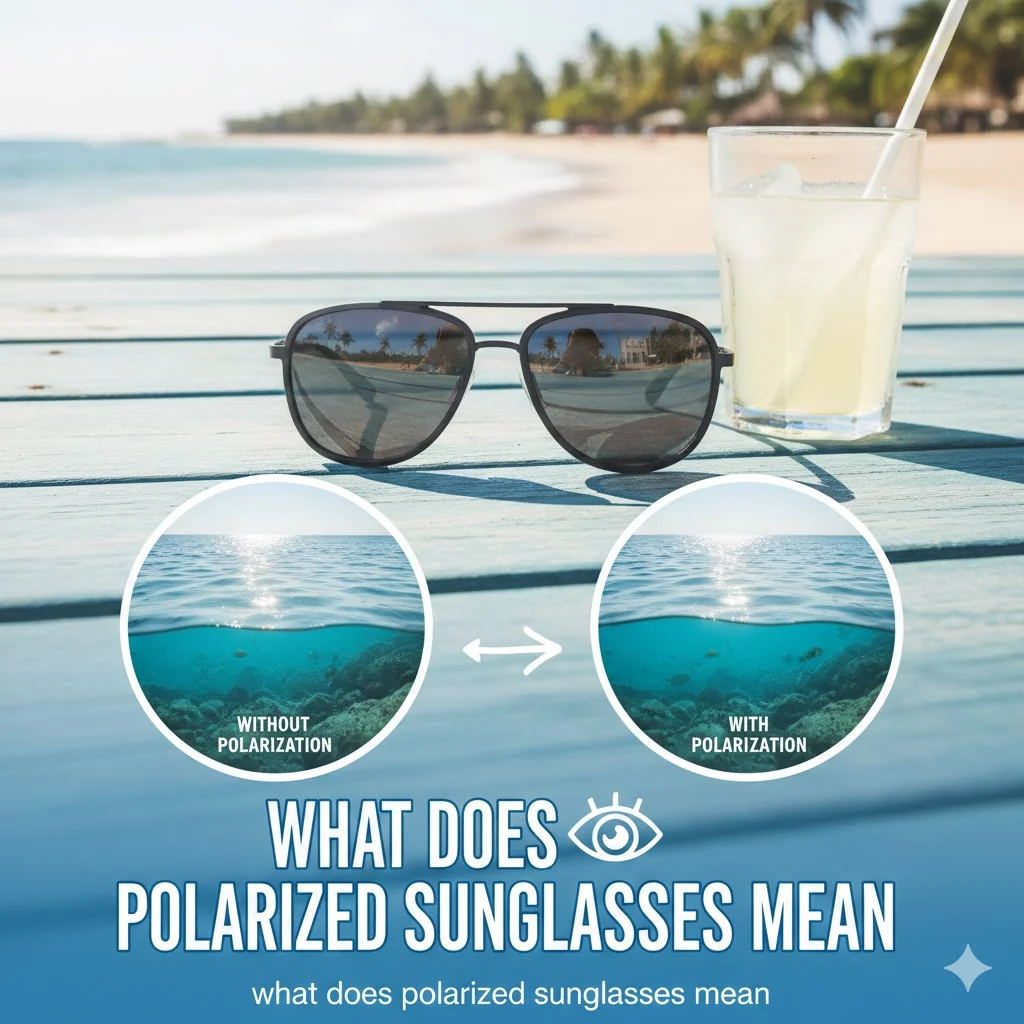
Ever wondered what does polarized sunglasses mean and why they cost a little more than regular shades? Polarized sunglasses are not just a fashion statement—they’re a functional tool designed to reduce glare, protect your eyes, and enhance vision clarity.
Whether you’re driving, fishing, hiking, or scrolling social media while wearing shades, understanding the science and practical benefits of polarized sunglasses can make a huge difference. In this article, we’ll cover the definition, how they work, their history, proper usage, and tips for choosing the perfect pair. By the end, you’ll know exactly why polarized sunglasses are worth the investment.
Definition & Meaning of Polarized Sunglasses
Polarized sunglasses are specially designed eyewear that reduces glare from reflective surfaces like water, snow, or roads. Unlike standard sunglasses, which simply darken your vision, polarized lenses contain a special filter that blocks intense reflected light, making it easier to see clearly and comfortably.
Key Points:
- Reduces Glare: Especially from horizontal surfaces like water or wet roads.
- Enhances Visual Comfort: Less eye strain and fatigue.
- Improves Clarity: Colors appear sharper and more defined.
Example in Real Life:
While fishing, Sarah noticed that without polarized sunglasses, the water’s glare made it hard to see beneath the surface. After putting on her polarized shades, the fish were clearly visible.
Bullet Points – Advantages at a Glance:
- Minimizes reflections and glare
- Reduces squinting in bright sunlight
- Protects against harmful UV rays
- Improves color perception and contrast
- Ideal for outdoor sports and driving
Background & History of Polarized Sunglasses
Polarized lenses were invented in the early 20th century by Edwin H. Land, the founder of Polaroid Corporation. The technology was originally developed for reducing glare in photography and military applications, but eventually made its way into consumer eyewear.
Key Historical Facts:
- 1936: Polaroid introduces polarized lenses to reduce glare from the sun.
- Post-WWII: Outdoor enthusiasts and drivers adopt polarized sunglasses.
- Modern Day: Polarized sunglasses are widely used in fishing, skiing, water sports, driving, and daily fashion.
Cultural Influence:
- In sunny regions, polarized sunglasses are a practical must-have.
- They became popular in fashion and lifestyle culture through movies, celebrities, and sports influencers.
How Polarized Sunglasses Work
Polarized lenses work using a special chemical film that blocks horizontal light waves, which are primarily responsible for glare.
Technical Explanation:
- Light reflects off surfaces like water or pavement.
- Reflected light tends to be horizontal and intensely bright.
- Polarized lenses filter out these horizontal waves, letting in only vertical light.
Visual Example:
Imagine standing by a lake. Without polarized sunglasses, sunlight reflects off the water and dazzles your eyes. With polarized sunglasses, that reflection is blocked, allowing you to see clearly beneath the water’s surface.
Quick Facts:
- Reduces eye strain significantly.
- Improves depth perception.
- Enhances visual comfort during bright sunny days.
Usage in Different Contexts
Polarized sunglasses are not only for casual wear—they have practical applications in multiple scenarios.
Driving:
- Reduces glare from wet roads or other vehicles’ headlights.
- Enhances safety by improving visibility.
Outdoor Sports:
- Fishing: See below water surface to spot fish.
- Skiing: Reduces glare from snow for better performance.
- Golf: Helps track the ball more clearly.
Daily Use:
- Protects eyes from UV damage while walking, jogging, or cycling.
- Reduces discomfort on bright, sunny days.
| Context | Example Usage | Benefit |
|---|---|---|
| Driving | “AWL, these polarized lenses make road glare disappear.” | Safety & comfort |
| Fishing | “I caught a fish I couldn’t see without polarized sunglasses.” | Better visibility |
| Skiing | “The snow glare is gone, and I can see the slopes clearly.” | Reduces eye strain |
| Daily Outdoors | “Walking in the park feels much easier on my eyes.” | UV protection & comfort |
Professional Considerations
In professional settings, polarized sunglasses are ideal for outdoor work but may not always be suitable indoors.
Tips for Professionals:
- Use for outdoor meetings, driving, or fieldwork.
- Avoid wearing sunglasses indoors unless medically necessary.
- Polarized lenses do not impact professionalism—they simply improve visual comfort outdoors.
Hidden or Misunderstood Features
While polarized sunglasses are beneficial, there are limitations or misunderstood aspects:
- LCD Screens: Polarized lenses can make digital screens (phones, GPS, dashboards) harder to read.
- Overcast Days: Glare reduction is less noticeable.
- Safety Note: Not a replacement for prescription lenses if vision correction is needed.
Example:
Jake put on his polarized sunglasses to check GPS while driving. The screen appeared dark until he tilted his head.
Quick Safety Tips:
- Test sunglasses before driving at night or using digital devices.
- Check for certified UV protection labels.
Usage in Fashion & Lifestyle
Polarized sunglasses have become a style statement in addition to being functional.
- Celebrities and influencers often sport polarized shades for a sleek, modern look.
- Many brands combine fashion with advanced lens technology.
- Sunglasses styles: aviators, wayfarers, round frames—all with polarized options.
Dialogue Example:
Emma: “Those shades look cool!”
Liam: “Thanks! Polarized too, so I can actually see without squinting.”
Comparison with Regular Sunglasses
| Feature | Polarized Sunglasses | Regular Sunglasses |
|---|---|---|
| Glare Reduction | Yes | No |
| UV Protection | Usually yes | Depends |
| Visual Comfort | High | Medium |
| Price | Higher | Lower |
| Best Use | Driving, fishing, sports | Casual outdoor wear |
Key takeaway: Polarized sunglasses provide additional benefits that make them ideal for glare-prone environments.
Tips for Choosing Polarized Sunglasses
Factors to Consider:
- UV Protection: Ensure lenses block 100% UVA & UVB rays.
- Lens Color: Gray/green for true color perception; brown/amber for contrast.
- Fit & Comfort: Choose frames that sit well and don’t slip.
- Brand & Certification: Look for reputable brands with UV certification.
Pro Tip: Test the polarization by looking at a reflective surface—the glare should be reduced dramatically.
FAQs
Q1: Can polarized sunglasses be worn at night?
A: Not recommended; they reduce visible light and can impair vision in low-light conditions.
Q2: Are all polarized sunglasses UV protected?
A: No. Always check for 100% UVA/UVB protection labels.
Q3: Can they be worn over prescription glasses?
A: Yes, clip-ons or custom prescription polarized lenses are available.
Q4: Do they work for snow or water?
A: Absolutely; they’re perfect for reducing glare from reflective surfaces.
Q5: How do I know if my sunglasses are polarized?
A: Look through the lenses at a reflective surface. Rotate the glasses—polarized lenses will darken reflections.
Q6: Are polarized lenses expensive?
A: They are generally pricier than standard lenses, but the benefits outweigh the cost for frequent outdoor use.
Conclusion
Understanding what does polarized sunglasses mean is essential for anyone spending time outdoors or in bright environments. Unlike regular sunglasses, polarized lenses reduce glare, enhance visual clarity, and protect your eyes from harmful UV rays. Whether for driving, fishing, skiing, or just a casual stroll, they improve comfort and safety while adding a stylish touch to your look. Investing in a quality pair ensures both protection and performance. Next time you shop for sunglasses, choose polarized lenses for better vision and eye health, while enjoying the outdoors in complete comfort and style.