Have you ever been told, “Why are you mean mugging me?”
Or seen someone comment “Stop mean mugging” on social media?
If yes, you’re not alone.
The phrase mean mug is popular in slang, texting, and everyday conversation. But its meaning depends on tone, facial expression, and context. For some, it’s playful. For others, it can feel rude or intimidating.
In this article, we’ll explain what does mean mug mean, where it comes from, how people use it in texts, social media, gaming, dating apps, and even professional settings. You’ll also learn how to respond, what to avoid, and how the meaning changes across cultures.
Let’s break it down in simple words.
Definition & Meaning of Mean Mug
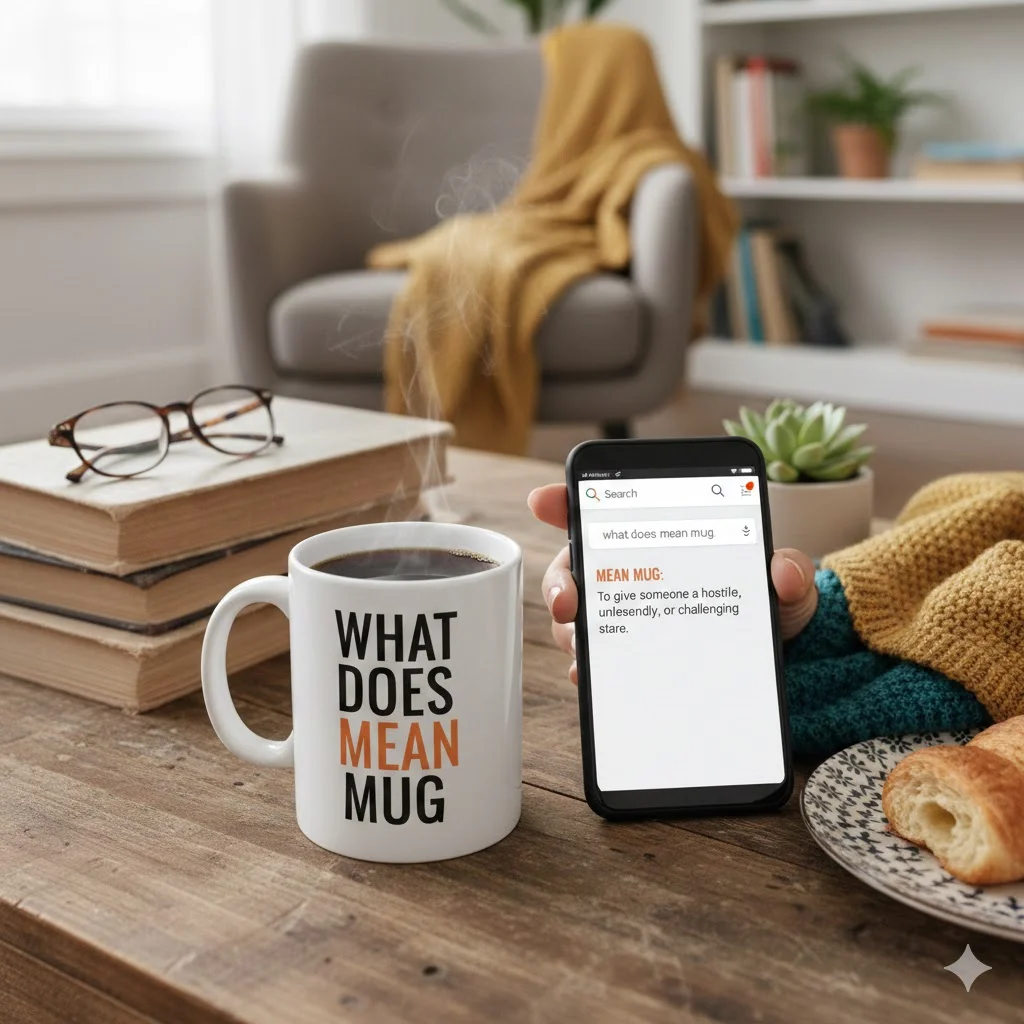
Mean mug is a slang phrase that means:
👉 Giving someone an angry, serious, or unfriendly facial expression.
It usually involves:
- A hard stare
- No smile
- Tight lips
- A “don’t mess with me” look
Simple Meaning
Mean mug = a hostile or tough-looking face
Common Interpretations
- Looking angry without speaking
- Staring at someone aggressively
- Showing attitude through facial expression
Example in Real Life
“I wasn’t mad. I just have a mean mug.”
Texting Example
“Why you mean mugging in every photo 😭”
Key Points to Remember
- It’s about facial expression, not words
- Can be playful or serious
- Context decides if it’s rude or funny
Background & History of Mean Mug
The phrase mean mug has deep roots in African American Vernacular English (AAVE) and urban culture.
Origins
- Popularized in hip-hop culture
- Used in street slang to describe tough expressions
- Often linked to confidence, dominance, or intimidation
Early Usage
Rappers and performers used “mean mug” to describe:
- Serious stage presence
- Tough image
- No-smile attitude
Cultural Influence
- Hip-hop music
- Urban fashion
- Street photography
- Rap lyrics
Over time, the phrase moved into:
- Social media
- Memes
- Everyday texting
Today, mean mug is widely understood, even outside hip-hop culture.
Usage in Different Contexts
The meaning of mean mug changes based on where it’s used.
In Texting
Used casually among friends.
Example:
“Relax, I’m not mad. That’s just my mean mug 😂”
On Social Media
Often playful or humorous.
Caption example:
“Woke up with a mean mug today 😤”
In Real Life
Can feel more intense.
Example:
“That guy kept mean mugging me across the room.”
Quick Context Table
| Context | Meaning | Tone |
|---|---|---|
| Texting | Serious face | Casual |
| Social media | Confident look | Playful |
| In person | Intimidating stare | Serious |
| Photos | No-smile pose | Neutral |
Mean Mug in Professional Communication
In professional settings, mean mug can be risky.
Why?
- Facial expressions matter at work
- Mean mugging may appear:
- Rude
- Disinterested
- Aggressive
Workplace Example
“He keeps mean mugging during meetings.”
This can hurt:
- Team relationships
- First impressions
- Leadership perception
Better Alternatives
Instead of saying “mean mug,” use:
- “Serious expression”
- “Focused look”
- “Neutral face”
Pro Tip
In professional emails or meetings:
- Avoid slang
- Maintain relaxed facial expressions
Hidden or Negative Meanings
While mean mug is usually harmless, it can feel offensive in some situations.
When It Feels Negative
- Staring at strangers
- Argument situations
- Authority figures
Risky Example
“Why you mean mugging me like that?”
This can sound confrontational.
Safer Usage
Add humor or emojis:
“Why you mean mugging? 😂”
Tone changes everything.
Mean Mug in Online Communities & Dating Apps
In dating apps, mean mug is very common.
Dating App Usage
Often refers to:
- Tough profile photos
- No smile selfies
Example:
“You cute, but why you mean mug in every pic?”
Gaming Communities
Used jokingly after wins or trash talk.
Example:
“He mean mugged after that clutch play.”
Tips for Safe Usage
- Use emojis
- Keep tone light
- Avoid accusing language
Comparison with Similar Slang Terms
Here’s how mean mug compares to similar phrases:
| Term | Meaning | Tone |
|---|---|---|
| Mean mug | Angry facial expression | Casual |
| Mugging | Robbing someone | Serious |
| Stank face | Disgusted expression | Playful |
| Death stare | Very intense look | Serious |
| Side-eye | Suspicious look | Subtle |
Important:
Never confuse mean mug with mugging (crime).
10 Slang Terms Related to Mean Mug
Here are popular slang terms with similar meanings:
- Mean mug – Tough facial expression
- Stank face – Disgusted look
- Death stare – Intense glare
- Hard look – Serious expression
- Side-eye – Judgmental glance
- Grill someone – Stare aggressively
- Stone face – No emotion
- Cold look – Emotionless stare
- Mad face – Angry expression
- No-smile pose – Neutral tough look
How to Respond When Someone Says “Mean Mug”
Your response depends on tone.
Casual Response
- “That’s just my face 😭”
- “I’m not mad, promise”
Funny Response
- “It’s my model face 😂”
- “Mean mug is my brand”
Professional Response
- “I was just concentrating”
- “Didn’t mean to seem serious”
Privacy-Conscious Response
- Change topic
- Smile and move on
Regional & Cultural Differences
Meaning varies slightly across regions.
United States
- Common slang
- Often playful
UK & Europe
- Less common
- May need explanation
Non-Native English Speakers
- Often misunderstood
- Can sound aggressive
Cultural Tip
If unsure, explain your expression instead of using slang.
FAQs
Q1: What does mean mug mean in slang?
It means giving an angry or serious facial expression.
Q2: Is mean mug offensive?
Not usually, but context matters.
Q3: Can mean mug be playful?
Yes, especially with friends or emojis.
Q4: Is mean mug used in texting?
Yes, very common in casual chats.
Q5: Should I use mean mug at work?
Better to avoid slang in professional settings.
Q6: Is mean mug related to crime?
No. It only refers to facial expressions.
Conclusion
Understanding what does mean mug mean helps you read social cues better in texting, social media, and real-life conversations. While the phrase usually refers to a serious or tough facial expression, its tone depends heavily on context. Used casually, it can be playful and funny. Used wrongly, it may feel rude or aggressive. Always consider where you are, who you’re talking to, and how your words or expressions may be received. When in doubt, explain your intention clearly. Slang is powerful, but clarity always wins.