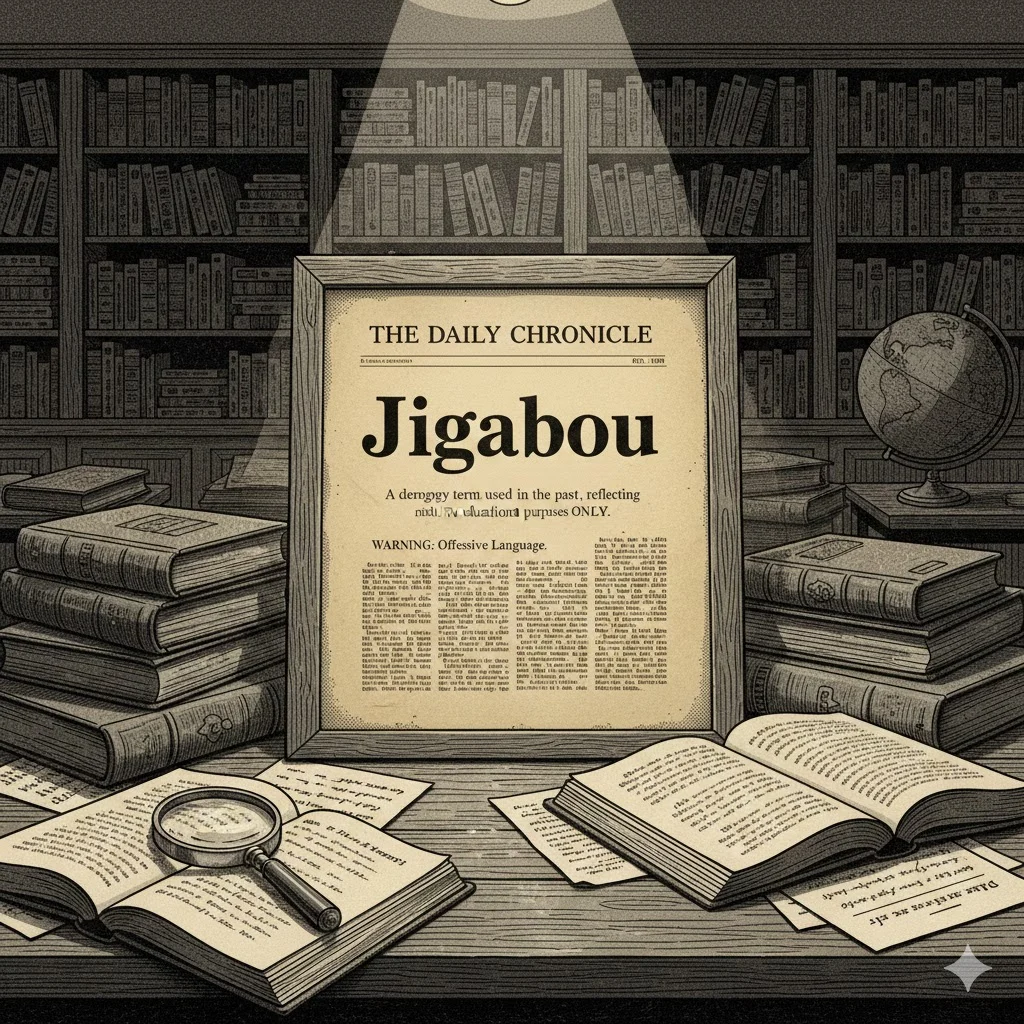
Scrolling through old texts, movies, or online forums, you might have seen the term “jigaboo” and wondered, “What does this word mean?”
If you’re a student, researcher, or anyone exploring slang, racial language, or historical terms, understanding jigaboo is important. While some slang is playful or harmless, this word is offensive and racist, historically used as a derogatory term toward Black people.
In this article, we’ll explain what jigaboo means, where it comes from, why it’s harmful, and the contexts in which it has been used. You’ll also see examples of historical usage, legal or social discussions, and learn why you should avoid using it today. By the end, you’ll understand both its meaning and its serious implications.
Quick Answer:
Jigaboo is a racial slur historically used to insult Black people. It’s offensive, derogatory, and should never be used in modern language.
🧠 What Does Jigaboo Mean?
Jigaboo is an offensive term targeting African Americans, mainly used in the United States during the late 19th and 20th centuries.
Origin and Etymology
- The word emerged in the early 1900s and is believed to have been derived from variations of African American vernacular or mispronunciations combined with racist stereotypes.
- It was used in literature, songs, and casual conversation by white speakers to dehumanize Black people.
- Like other racial slurs, it reflects racist ideologies and social hierarchies.
Meaning in Simple Words
- Jigaboo = derogatory term for a Black person = offensive racial insult
- Its usage has been largely eliminated in polite conversation, but it may appear in historical texts, movies, or discussions about racism.
Example (historical, for context only):
In an early 20th-century song, lyrics included the term “jigaboo” to mock Black performers — illustrating the derogatory nature of the term.
In short:
Jigaboo = offensive racial slur = Never use in modern communication
🌍 Where Has Jigaboo Been Used?
While extremely offensive, understanding historical contexts helps people recognize and educate about racism.
Historical Usage
- 🎭 Vaudeville shows – Mocking Black performers
- 📖 Old literature – Used as a racial insult in print
- 🎵 Racist songs – Early 20th-century minstrel music
- 📰 Newspapers & magazines (pre-civil rights era) – Often used in editorial or casual racist commentary
Modern Context
- ❌ In today’s conversation, it is not acceptable
- ⚠️ Using it online, in texts, or social media is considered hate speech
- Used academically or educationally to study racism or history
Tone: Always serious, historical, and educational.
💬 Examples of Usage (Historical / Educational Context)
Note: These examples are for educational purposes only.
- Early 1900s song lyrics included derogatory lines using “jigaboo” to insult performers.
- 1920s newspapers occasionally used the term in racist editorials.
- In historical novels, the term appears to reflect racist dialogue of the era.
- Some movies from the mid-20th century include the word to illustrate period racism.
Important:
Never use this word in casual conversation or online chats. Doing so is offensive and can have serious social, legal, or professional consequences.
🕓 When to Discuss & When Not to Use Jigaboo
✅ When to Discuss
- Historical studies or academic research
- Education about racism, civil rights, or social justice
- Analyzing historical media, literature, or music
- Awareness campaigns about offensive language
❌ When NOT to Use
- Casual conversations or texting
- Social media posts or comments
- Jokes or memes
- Professional or workplace discussions
📊 Comparison Table
| Context | Example | Why It Works / Doesn’t Work |
|---|---|---|
| Academic Paper | “The term ‘jigaboo’ illustrates historical racism in early 20th-century media.” | Educational, informative |
| Casual Chat | “That person is a jigaboo” | Offensive, unacceptable |
| Online Debate | “Historically, the word ‘jigaboo’ was used in minstrel shows.” | Informative, educational |
| Media Studies | “Films from the 1930s often include racial slurs like ‘jigaboo’ to reflect social attitudes.” | Academic context |
| Workplace | Using the term to insult someone | Extremely inappropriate, unacceptable |
🔄 Similar Racial Terms (Educational Context Only)
| Slang / TermMeaningContext / Usage | ||
|---|---|---|
| Negro | Outdated, offensive term for Black people | Historical use; now generally offensive |
| Colored | Historical term for Black Americans | Educational discussions; obsolete now |
| Darkie | Derogatory racial slur | Offensive, never use |
| N-word | Highly offensive slur | Discuss only academically |
| Afro-American | Historical descriptor | Somewhat outdated; used in historical context |
FAQs About Jigaboo
1. What does “jigaboo” mean?
It is a racial slur historically used to insult Black people.
2. Is it okay to use jigaboo in text or online?
No. It is highly offensive and considered hate speech.
3. Why should I know about this word?
Understanding offensive terms helps educate about racism, history, and social justice.
4. Where does the term come from?
It originated in the early 20th century in the U.S., likely from mispronunciations and racist stereotypes.
5. Can this word appear in media?
Yes, mostly in historical movies, literature, or academic research.
6. How should I respond if someone uses it?
Politely educate them that it’s offensive, or report hate speech online.
🎯 Mini Quiz – Test Your Knowledge
1. Is “jigaboo” a harmless slang word?
❌ False
2. Where is it appropriate to discuss the word?
a) Academic or historical context ✅
b) Casual texts
c) Memes
3. True or False: Using this word online can be considered hate speech.
✅ True
4. What is the main reason it’s offensive?
a) Targets and insults Black people ✅
b) It’s outdated
c) It’s uncommon
5. Should you ever use it jokingly with friends?
❌ No
📝 Conclusion
The term jigaboo is not slang to use casually. It’s a racial slur with a deeply offensive history. Understanding its meaning, origins, and context is important for education, history, and social awareness.
Using this knowledge responsibly allows you to recognize racism in historical texts, media, and social discussions while avoiding harmful language in modern communication.
Educating yourself and others about words like jigaboo is a step toward respectful communication and social responsibility.