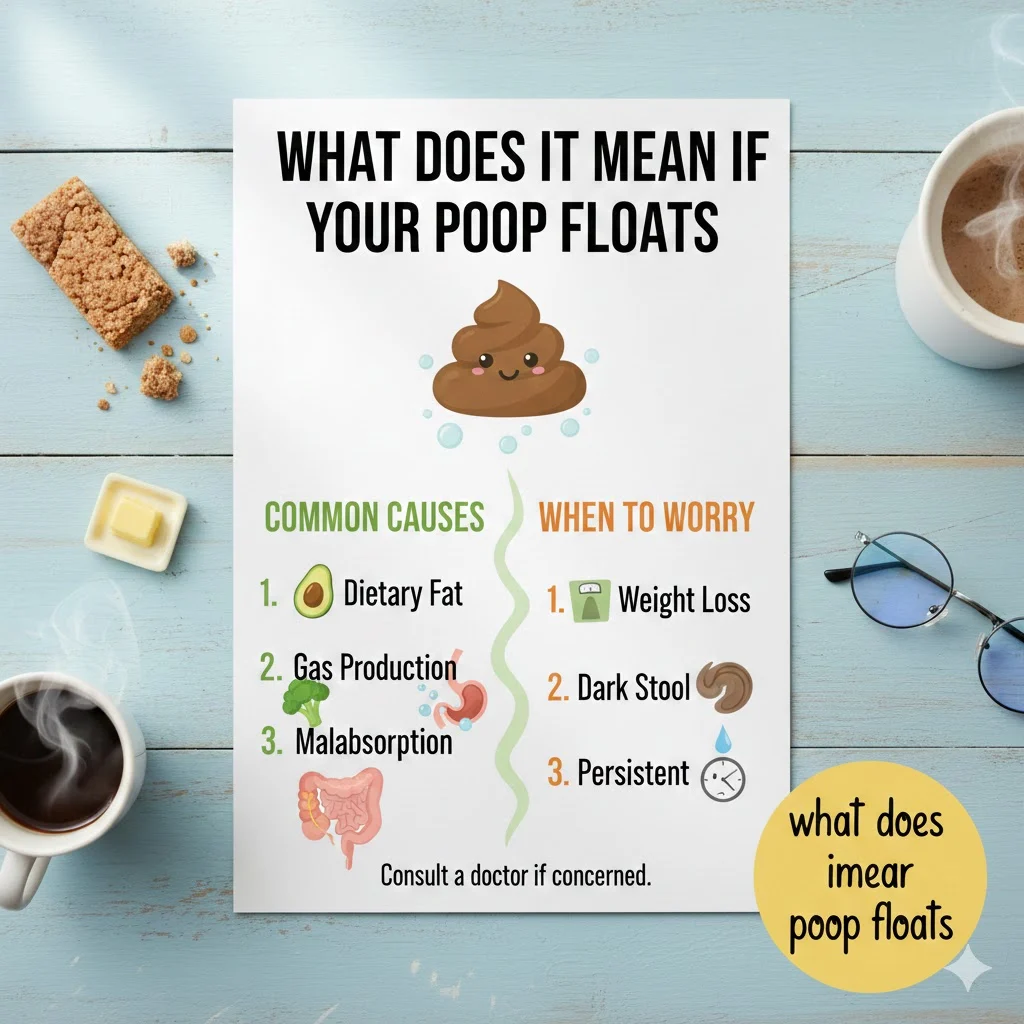
Ever noticed that your poop floats instead of sinking? While it might feel a little awkward to think about, floating stool can reveal important information about your digestive health.
In this guide, we’ll explore what it means if your poop floats, possible causes, when to worry, and tips to maintain a healthy gut. Whether you’re curious about your digestion or just want to understand your body better, this article is for you.
Definition & Meaning
Floating poop occurs when stool has higher gas content or fat content, making it less dense than water.
Key Points:
- Normal Occurrence: Occasional floating stool is usually harmless.
- Persistent Issue: Frequent floating may indicate malabsorption or digestive issues.
- Associated Symptoms: Gas, bloating, diarrhea, or greasy stool may appear.
Examples:
- Light, airy stool after eating fiber-rich foods.
- Greasy floating stool with foul odor, possibly linked to fat malabsorption.
Table: Normal vs Concerning Floating Stool
| Type | Cause | Concern Level |
|---|---|---|
| Occasional floating | Fiber-rich diet | Low |
| Persistent, greasy | Malabsorption, celiac disease | Medium-High |
| Floating + pain/weight loss | Pancreatic or liver issues | High |
Background & History
Floating stool has been discussed in medical literature for decades. Doctors often note it as a sign of digestive efficiency or potential fat malabsorption.
- Historical observation: Floating stool has long been associated with steatorrhea (fatty stools).
- Cultural awareness: While often joked about, medical professionals encourage monitoring unusual stool patterns.
- Scientific studies: High-fat diets, gas-producing foods, and digestive enzyme deficiencies can all influence stool buoyancy.
Causes of Floating Stool
Common causes include:
- Dietary factors: High fiber, gas-producing foods like beans, broccoli, and carbonated drinks.
- Excess gas: Swallowed air or bacterial fermentation in the gut.
- Fat malabsorption: Pancreatic insufficiency, celiac disease, cystic fibrosis.
- Medical conditions: Chronic pancreatitis, gallbladder issues, liver disease.
Tip: Occasional floating stool is usually harmless, but consistent changes warrant a doctor visit.
When to See a Doctor
Seek medical advice if floating stool is accompanied by:
- Unexplained weight loss
- Persistent diarrhea or greasy stool
- Abdominal pain
- Blood in stool
These symptoms may indicate underlying digestive or metabolic disorders.
Tips for Healthy Digestion
- Eat a balanced diet: Include fiber-rich fruits, vegetables, and whole grains.
- Stay hydrated: Water helps regulate bowel movements.
- Monitor fat intake: Too much fat may lead to greasy, floating stools.
- Regular checkups: Especially if you have chronic digestive symptoms.
Comparison with Similar Digestive Signs
| Symptom | Possible Cause | Notes |
|---|---|---|
| Floating poop | Gas, fat malabsorption | Often harmless if occasional |
| Diarrhea | Infection, food intolerance | Monitor for dehydration |
| Hard stool | Low fiber, dehydration | Increase water and fiber |
| Greasy stool | Fat malabsorption | Persistent symptom, medical check |
FAQs
Q1: Can fiber make my poop float?
A: Yes, high-fiber foods increase gas content, sometimes causing stool to float.
Q2: Is floating poop dangerous?
A: Not always. Occasional floating is normal, but persistent greasy stools may need attention.
Q3: Can lactose intolerance cause floating poop?
A: Yes, undigested lactose can increase gas and cause floating stools.
Q4: Does stool color affect floating poop concerns?
A: Dark, pale, or greasy stools combined with floating may indicate health issues.
Q5: How can I improve digestion naturally?
A: Eat fiber, stay hydrated, exercise regularly, and avoid excessive fatty foods.
Conclusion
Floating poop is usually harmless, especially if it happens occasionally after eating fiber-rich or gas-producing foods. However, persistent floating stools, especially greasy or foul-smelling ones, may indicate digestive issues like fat malabsorption or pancreatic problems. Monitoring stool patterns and combining it with a healthy diet, hydration, and regular checkups can help maintain good gut health.
Understanding what it means if your poop floats empowers you to make informed choices about your digestive wellbeing—and know when to seek medical advice. Your gut health matters, so paying attention to even small signs can make a big difference.