You’ve probably seen IDGAF pop up in text messages, social media comments, memes, or online chats. At first glance, it looks bold. Maybe even rude. And honestly, it can be.
So, what does IDGAF mean, and why do people use it so often online?
IDGAF is one of those internet slang terms that carries strong emotion. It can express confidence, frustration, humor, or complete indifference. But it can also come across as offensive if used in the wrong place or with the wrong person.
This guide breaks down the IDGAF meaning in text, its background, real-life examples, professional risks, cultural differences, and how to respond without causing drama. Whether you’re a teen, social media user, or working professional, this article will help you understand when IDGAF works—and when it absolutely doesn’t.
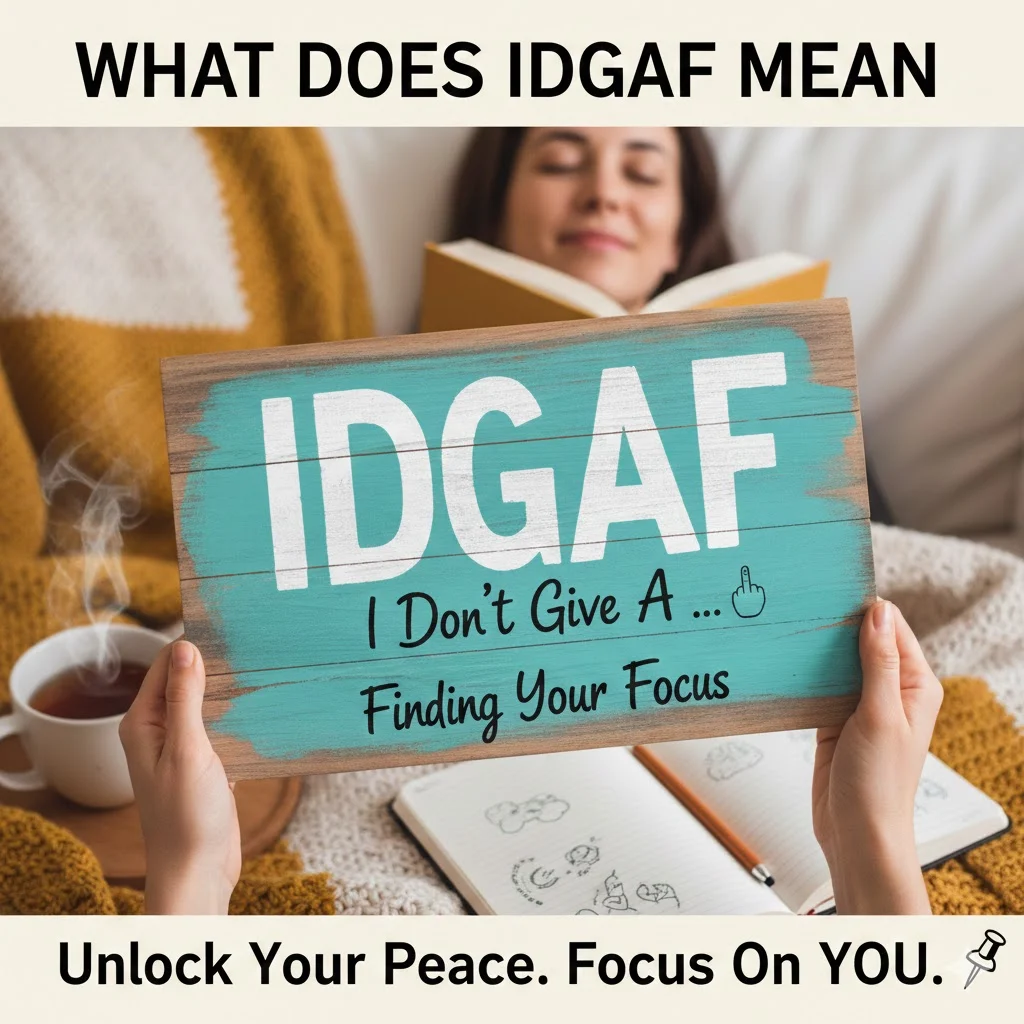
Definition & Meaning of IDGAF
IDGAF stands for “I Don’t Give A F*.”**
Yes, it contains a swear word. That’s why tone and context matter a lot.
What IDGAF Really Means
At its core, IDGAF expresses:
- Complete indifference
- Emotional detachment
- Defiance or confidence
- Frustration or anger
- Dark humor or sarcasm
Simple Breakdown
- I – The speaker
- Don’t Give – No concern or interest
- A F* – Emphasizes intensity
Text Message Examples
Casual conversation:
“People keep judging me, but IDGAF.”
Frustrated tone:
“They changed the plan again. IDGAF anymore.”
Confident tone:
“I’m doing my own thing. IDGAF what anyone thinks.”
Key Points to Remember
- IDGAF is strong language
- Meaning depends heavily on tone
- It’s common in slang, texting, memes, and social media
- Not suitable for all audiences
Background & History of IDGAF
IDGAF didn’t come from texting alone. Its roots are deeper.
Origin
The phrase “I don’t give a f***” has existed in spoken English for decades. The abbreviation IDGAF became popular with:
- Early internet forums
- Rap and hip-hop culture
- Meme culture
- Twitter and Tumblr
Cultural Influence
- Music: Artists used it to express rebellion and self-confidence
- Memes: Helped normalize it as humor
- Social media: Shortened form made it easier to post
Evolution Over Time
- Early use = aggressive or angry
- Modern use = casual, ironic, or humorous
- Now used by teens, gamers, influencers, and creators
Despite wider usage, IDGAF still carries emotional weight.
Usage in Different Contexts
IDGAF can mean different things depending on where it’s used.
Texting & Private Chats
Most common setting.
Examples:
“I tried fixing it, but IDGAF now.”
Tone can be:
- Funny
- Frustrated
- Confident
Social Media
Often used for:
- Bold captions
- Self-expression
- Meme humor
Example caption:
“Living my life. IDGAF 😌”
Gaming Communities
Used to show:
- Rage quitting
- Confidence
- Trash talk
Example:
“Lost the match but IDGAF, had fun.”
Casual vs Serious Use
| Context | Tone | Risk Level |
|---|---|---|
| Friends | Casual | Low |
| Social media | Bold | Medium |
| Gaming | Aggressive | Medium |
| Workplace | Unprofessional | High |
Professional Communication
Using IDGAF in professional settings is risky.
Why It’s Inappropriate
- Contains profanity
- Sounds disrespectful
- Can damage reputation
- Shows lack of professionalism
Examples to Avoid
❌ “IDGAF about the deadline.”
❌ “Honestly, IDGAF what the client wants.”
Safer Alternatives
- “I’m not concerned about that.”
- “That doesn’t affect my work.”
- “I’m comfortable with this decision.”
Professional Rule
If you wouldn’t say it in a meeting, don’t text it to colleagues.
Hidden or Offensive Meanings
While IDGAF isn’t a slur, it can offend.
Why It Can Be Risky
- Contains explicit language
- Can sound dismissive
- May hurt feelings
Risky Examples
“IDGAF about your problem.”
Safer Usage
“I can’t focus on that right now.”
Tip
Tone + relationship + platform = safety.
Usage in Online Communities & Dating Apps
IDGAF appears often on:
- Dating apps
- Discord
Dating App Usage
Can signal:
- Confidence
- Emotional distance
- Sarcasm
Bio example:
“Drama-free. IDGAF about games.”
Messaging Example
“If we vibe, we vibe. If not, IDGAF.”
⚠️ Warning: Some people find it attractive. Others find it rude.
Comparison with Similar Terms
| Term | Meaning | Tone | Profanity |
|---|---|---|---|
| IDGAF | I don’t care at all | Strong | Yes |
| IDC | I don’t care | Neutral | No |
| IDRC | I don’t really care | Mild | No |
| NBD | No big deal | Calm | No |
| WHATEVER | Dismissive | Medium | No |
Key Difference:
IDGAF is the strongest and most aggressive.
10 Slang Terms & Acronyms Related to IDGAF
- IDC – I don’t care
- IDRC – I don’t really care
- DGAF – Don’t give a f***
- NBD – No big deal
- SMH – Shaking my head
- TBH – To be honest
- YOLO – You only live once
- FOMO – Fear of missing out
- MEH – Indifference
- OKAY THEN – Passive dismissal
How to Respond to IDGAF
Your response should match the situation.
Casual Responses
- “Fair enough 😂”
- “I feel that.”
Funny Responses
- “Mood.”
- “That’s the energy.”
Calm or Neutral
- “Got it.”
- “Understood.”
Professional
- Ignore slang
- Redirect conversation politely
Privacy-Conscious
- React with emoji
- Change topic
Regional & Cultural Differences
IDGAF is understood globally but accepted differently.
United States & UK
- Common in casual speech
- Still considered rude in formal settings
Australia & Canada
- Casual use common among friends
- Not workplace-friendly
Non-Native English Speakers
- Often misunderstood
- Profanity impact stronger
Cultural Tip
When unsure, don’t use it.
FAQs
What does IDGAF mean in texting?
It means “I don’t give a f***,” expressing strong indifference.
Is IDGAF rude?
It can be, depending on tone and audience.
Can I use IDGAF on social media?
Yes, but be mindful of followers and platform rules.
Is IDGAF appropriate at work?
No. It’s considered unprofessional.
What’s a polite alternative to IDGAF?
“I’m not concerned about that” or “It doesn’t matter to me.”
Is DGAF the same as IDGAF?
Yes, DGAF removes “I” but keeps the same meaning.
Conclusion
Understanding what does IDGAF mean helps you navigate modern texting and online communication with confidence. While the acronym is popular in social media, gaming, and casual chats, it carries strong language and emotion. Used correctly, it can express confidence or humor. Used carelessly, it can offend or damage relationships, especially in professional settings. Always consider your audience, tone, and platform before using IDGAF. When in doubt, choose a cleaner alternative. Smart communication isn’t just about saying what you feel, it’s about saying it the right way.