You open your prenatal test report.
You scan the numbers.
Then you see a term that stops you cold: fetal fraction.
It sounds technical.
It sounds serious.
And suddenly, you have questions.
What does fetal fraction mean?
Is it good or bad?
Should you worry if it’s low?
If you’re pregnant, planning pregnancy, or reviewing NIPT (Non-Invasive Prenatal Testing) results, understanding fetal fraction is very important. It directly affects how accurate your test results are.
This guide explains fetal fraction in simple words, without medical confusion. You’ll learn what it means, why it matters, what’s normal, and what to do if it’s low—all in clear, human language.
What Does Fetal Fraction Mean?
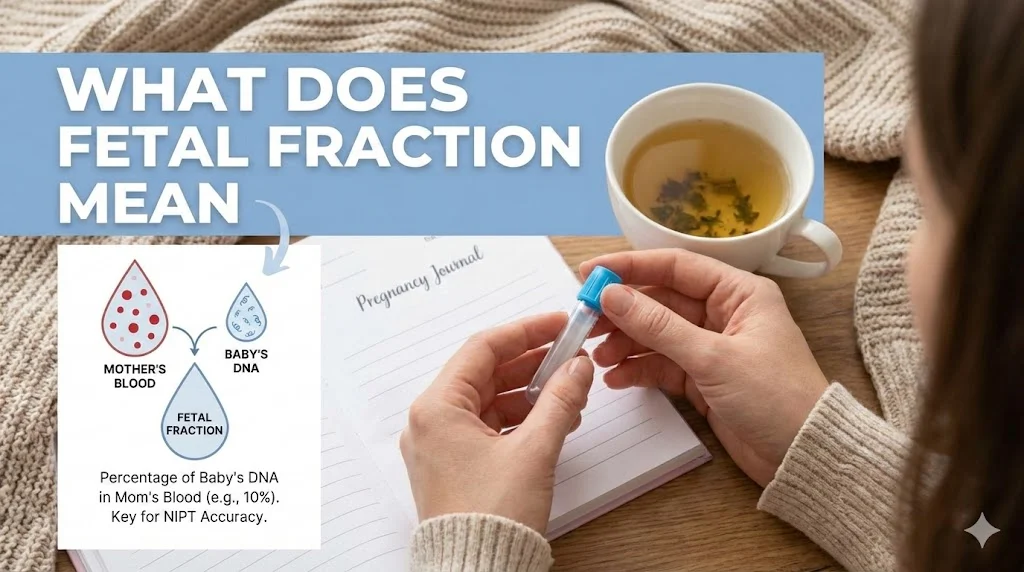
Fetal fraction refers to the percentage of fetal DNA present in a pregnant person’s blood sample during certain prenatal tests.
Here’s the simple version:
Fetal fraction = how much baby DNA is mixed with mom’s DNA in a blood test
During pregnancy, small fragments of DNA from the placenta (which represents the baby) enter the mother’s bloodstream. Prenatal screening tests analyze this DNA.
Key Points to Remember
- Fetal fraction is measured as a percentage
- It comes from the placenta, not directly from the fetus
- Higher fetal fraction = more reliable test results
- Lower fetal fraction = possible test failure or repeat test
Why Is Fetal Fraction Important?
Fetal fraction plays a critical role in prenatal screening accuracy.
If the fetal fraction is too low, the test may:
- Give inconclusive results
- Be less accurate
- Need to be repeated
Why Doctors Care About Fetal Fraction
- It determines if a test result is trustworthy
- It affects detection of chromosomal conditions
- It helps labs decide whether to issue a result or not
In short:
No matter how advanced the test is, it needs enough fetal DNA to work properly.
Fetal Fraction and NIPT Explained Simply
Most people encounter the term fetal fraction during NIPT testing.
What Is NIPT?
NIPT (Non-Invasive Prenatal Testing) is a blood test that screens for:
- Down syndrome (Trisomy 21)
- Trisomy 18
- Trisomy 13
- Sex chromosome conditions
How Fetal Fraction Fits In
NIPT looks at:
- Maternal DNA
- Placental (fetal) DNA
If fetal DNA makes up too small a portion, the test cannot confidently detect abnormalities.
What Is a Normal Fetal Fraction Range?
Most laboratories consider a minimum fetal fraction of 4% necessary for reliable results.
Typical Fetal Fraction Ranges
| Fetal Fraction | Meaning |
|---|---|
| Below 4% | Too low – test may fail |
| 4–6% | Minimum acceptable |
| 6–10% | Good |
| 10%+ | Excellent |
Higher fetal fraction = better confidence in results
What Causes Low Fetal Fraction?
Low fetal fraction is common and often not dangerous.
Common Causes
- Early pregnancy (before 10 weeks)
- Higher maternal weight
- Certain medications
- Placental factors
- Lab or sample issues
Important Reassurance
Low fetal fraction does NOT automatically mean:
- Something is wrong with the baby
- There is a genetic problem
Most cases resolve with time or repeat testing.
Does Fetal Fraction Increase Over Time?
Yes.
Fetal fraction naturally increases as pregnancy progresses.
Timeline Overview
- 9–10 weeks: lower fetal fraction
- 11–13 weeks: steady increase
- Second trimester: higher levels
This is why doctors often recommend waiting until at least 10 weeks for NIPT.
What Happens If Fetal Fraction Is Too Low?
If your fetal fraction is too low, the lab may report:
- “No result”
- “Inconclusive”
- “Insufficient fetal DNA”
Next Steps Usually Include
- Repeating the test later
- Ultrasound follow-up
- Alternative screening options
- Genetic counseling (if needed)
Most repeat tests come back completely normal.
Is Low Fetal Fraction Dangerous?
In most cases, no.
Low fetal fraction is usually linked to:
- Timing of the test
- Biological factors
Rarely, it can be associated with:
- Placental issues
- Chromosomal conditions
This is why doctors may recommend additional monitoring, not panic.
Can You Improve Fetal Fraction?
You cannot directly control fetal fraction, but these steps may help:
Helpful Tips
- Test after 10–11 weeks
- Stay well hydrated
- Follow doctor instructions
- Avoid unnecessary early testing
Time is often the biggest solution.
Fetal Fraction vs Baby DNA: Are They the Same?
Not exactly.
- Fetal fraction comes from the placenta
- Placental DNA usually matches fetal DNA
- Rare differences can occur
Doctors interpret results carefully because of this distinction.
Fetal Fraction and Baby’s Gender Accuracy
Fetal fraction affects gender determination accuracy.
- Low fetal fraction = less reliable gender result
- Higher fetal fraction = clearer Y-chromosome detection
This is why early gender predictions may change later.
Fetal Fraction in Twins and IVF Pregnancies
Twin Pregnancies
- Fetal fraction is combined
- Individual baby contribution varies
- Interpretation is more complex
IVF Pregnancies
- Fetal fraction behaves similarly
- Timing still matters
- No increased risk solely due to IVF
Comparison: Fetal Fraction vs Other Prenatal Tests
| Test Type | Uses Fetal Fraction? | Invasive? |
|---|---|---|
| NIPT | Yes | No |
| Amniocentesis | No | Yes |
| CVS | No | Yes |
| Ultrasound | No | No |
Common Myths About Fetal Fraction
Myth: Low fetal fraction means miscarriage
Truth: Usually false
Myth: High fetal fraction means perfect baby
Truth: It improves accuracy, not guarantees
Myth: You can “boost” fetal fraction fast
Truth: Time matters most
FAQs About Fetal Fraction
Q1: Is fetal fraction part of every pregnancy test?
No. It mainly applies to NIPT blood tests.
Q2: Can fetal fraction change between tests?
Yes, it often increases as pregnancy progresses.
Q3: Does low fetal fraction mean Down syndrome?
No. It only affects test reliability, not diagnosis.
Q4: Can stress lower fetal fraction?
No direct evidence links stress to fetal fraction.
Q5: Will my doctor explain fetal fraction results?
Yes. Always discuss results with your healthcare provider.
Q6: Is fetal fraction related to baby’s health?
Indirectly. It affects screening accuracy, not health itself.
Conclusion
Understanding what fetal fraction means can remove a lot of fear from prenatal test results. It simply measures how much baby DNA is present in a blood sample and helps determine how accurate certain screenings are. A low fetal fraction is common, especially early in pregnancy, and usually resolves on its own. It does not automatically signal a problem. With proper timing, medical guidance, and follow-up testing when needed, fetal fraction becomes a helpful tool—not something to worry about. Knowledge brings reassurance, and informed parents make calmer decisions.