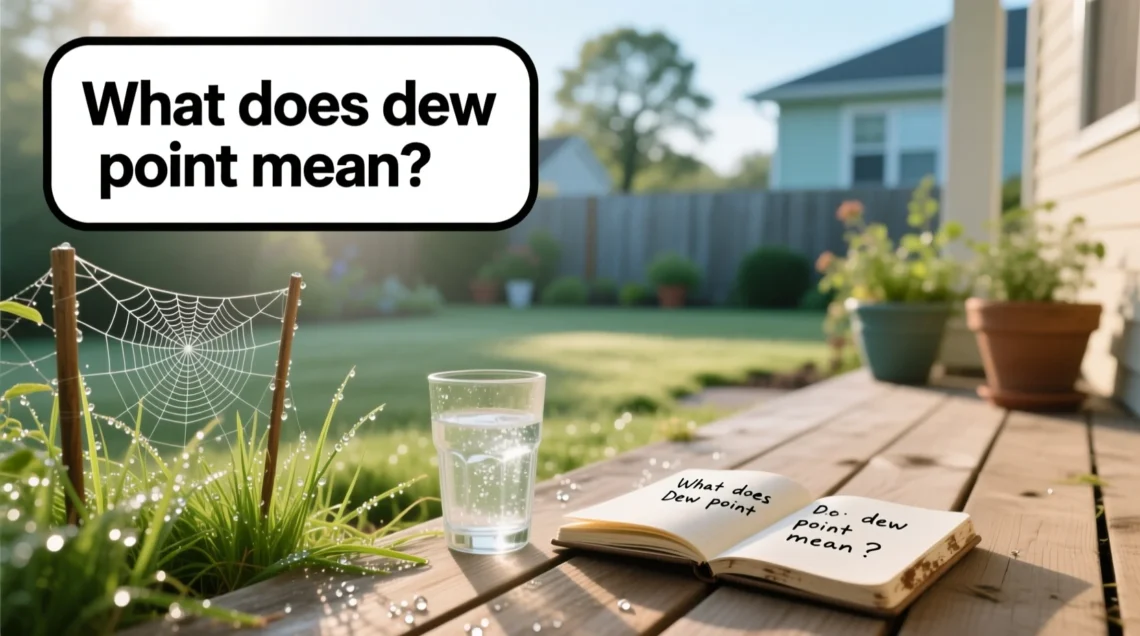
Have you ever seen the weather report say something like “Dew Point: 65°F” and wondered what it really means? You’re not alone. Dew point is a term that pops up often in weather apps, news, and forecasts, but it can sound confusing if you’re not a meteorologist.
This guide explains what dew point means, how it’s measured, why it matters, and how it affects your day. By the end, you’ll understand dew point clearly and be able to use it like a weather pro.
Quick Answer:
Dew point is the temperature at which air becomes saturated with moisture and water vapor starts condensing into dew. It’s a scientific, weather-related term that tells you how humid the air feels.
🧠 What Does Dew Point Mean?
The dew point is the temperature at which air cannot hold any more water vapor. When the air cools to this temperature, dew, fog, or condensation forms.
Example:
“The dew point is 60°F, so early morning grass will be wet with dew.”
Key Points:
- A higher dew point = more moisture in the air = feels more humid.
- A lower dew point = drier air = feels cooler and crisp.
- Dew point is different from temperature or relative humidity, though they are related.
In short:
Dew Point = Temperature at which air becomes saturated = Indicates humidity and moisture level.
🌍 How Dew Point Works
- Air contains water vapor; the warmer it is, the more vapor it can hold.
- Cooling air causes it to reach a point where vapor condenses into water droplets — this is the dew point.
- Dew forms on surfaces like grass, cars, and windows when air reaches dew point overnight.
Practical Tip:
A dew point above 65°F often feels sticky or humid, while below 50°F feels dry and comfortable.
📱 Where Dew Point Is Used
Dew point is a term you’ll see in:
- 🌡️ Weather forecasts – TV, apps, and news
- 📱 Weather apps – Shows comfort levels for the day
- 🌿 Agriculture – Farmers track dew point for crops
- 🏠 Home maintenance – Prevent mold, condensation, or humidity issues
- 🏃♂️ Outdoor activities – Helps decide if it feels muggy or dry
Tone: Scientific but practical; used by weather enthusiasts, professionals, and everyday people.
💬 Real-Life Examples of Dew Point
- Morning Weather Report
“Today’s dew point is 68°F. It’s going to feel humid, so wear light clothes.”
- Gardening Tip
“Dew point is 55°F. Water your plants in the morning before condensation evaporates.”
- Comfort Check
“Dew point is low, around 45°F — perfect for hiking.”
- Air Conditioning Setting
“Keep AC running until dew point reaches 60°F to avoid sticky rooms.”
- Car Windows
“Dew point is 62°F; wipe windows to prevent fog.”
- Camping Advice
“Tent surfaces may get wet because dew point is 50°F tonight.”
🕓 When to Consider Dew Point
✅ When Dew Point Matters
- Planning outdoor activities
- Gardening or farming
- Air conditioning and HVAC adjustments
- Monitoring humidity in homes
- Understanding weather forecasts
❌ When Dew Point Isn’t Critical
- Casual conversation about temperature
- Indoor conditions already climate-controlled
- Basic rain predictions (unless combined with humidity)
- Non-outdoor work or events
Comparison Table
| Context | Example Phrase | Why It Works |
|---|---|---|
| Weather Forecast | “Dew point 70°F, humid today” | Shows humidity level clearly |
| Gardening | “Dew point 55°F, water plants” | Helps plan watering |
| Outdoor Sports | “Dew point 48°F, cool and dry” | Indicates comfort level |
| Home HVAC | “Dew point above 60°F, AC on” | Prevents sticky air |
| Casual Talk | “Feels hot” | Less precise, not technical |
🔄 Similar Terms or Related Concepts
| Term | Meaning | When to Use |
|---|---|---|
| Relative Humidity | Percentage of moisture in air | Daily weather info |
| Heat Index | Feels-like temperature combining heat + humidity | Hot days |
| Frost Point | Dew point below freezing | Winter weather |
| Condensation | Water forming from air | Physical surfaces, windows |
| Humidity | Overall moisture content | General weather understanding |
🙋♂️ FAQs About Dew Point
1. Is dew point the same as humidity?
Not exactly. Dew point measures temperature at which air saturates, while humidity is percentage of water in the air.
2. What dew point feels comfortable?
40–60°F is comfortable; 60–70°F feels humid; above 70°F feels sticky.
3. Can dew point predict rain?
It helps. High dew points indicate moist air, which can lead to rain or fog.
4. Why is dew point important for farmers?
It tells them when plants may get wet and helps prevent disease from excessive moisture.
5. How is dew point measured?
Using hygrometers, weather stations, or calculations from temperature + humidity.
6. Does dew point change throughout the day?
It can slightly, but it’s more stable than temperature. Nighttime cooling often leads to dew formation.
📝 Mini Quiz – Test Your Knowledge
1. What does dew point indicate?
a) Temperature when air condenses ✅
b) Daily rainfall
c) Sunlight intensity
2. Which dew point feels most humid?
a) 45°F
b) 70°F ✅
c) 30°F
3. Dew point is measured in:
a) Percentage
b) Temperature ✅
c) Inches
4. Why do farmers care about dew point?
a) To water crops efficiently ✅
b) To measure wind speed
c) To track sunlight
5. Dew forms when:
a) Air reaches dew point ✅
b) Temperature rises above 100°F
c) Humidity is zero
6. A low dew point means:
a) Air feels dry ✅
b) Air feels sticky
c) Air is wet
📝 Conclusion
Dew point is a simple yet powerful weather concept. It tells you when air is saturated, how humid it feels, and whether dew, condensation, or fog may form. Understanding dew point helps with daily comfort, farming, outdoor activities, and home maintenance. Now, when you see a dew point reading on your weather app, you’ll know exactly what it means and how it affects your day.