If you’ve ever considered buying a car, a house, or any property, you might have come across the term “clean title.” But what does it really mean? Is it just a fancy term, or does it actually matter for your investment?
Whether you’re a first-time buyer, a car enthusiast, or someone navigating real estate deals, knowing what a clean title means is crucial. A clean title can save you from legal headaches, hidden costs, and ownership disputes.
In this article, we’ll break down what a clean title means, how it differs from other titles, why it’s important, and how to verify it explained in simple, friendly language that anyone can understand.
Definition & Meaning of Clean Title
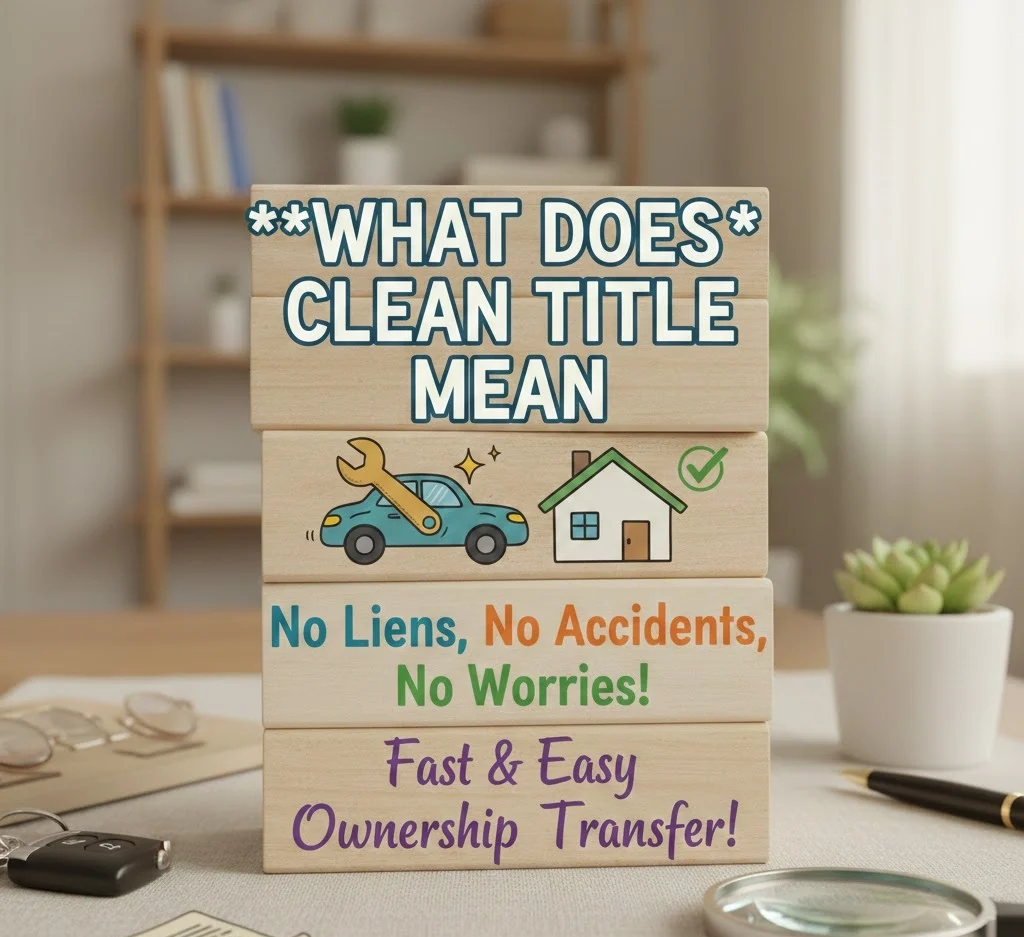
A clean title is a legal term used to describe ownership of a property or vehicle that has no major liens, damages, or legal issues.
Key Points:
- For vehicles: A clean title indicates the car hasn’t been severely damaged, totaled, or involved in major accidents.
- For real estate: A clean title ensures the property is free from legal disputes, unpaid taxes, or liens.
Examples in Dialogue:
Car:
Buyer: “This car is listed as a clean title. Does that mean it’s accident-free?”
Dealer: “Yes, it hasn’t been in any major accidents and has no outstanding loans.”
Property:
Homebuyer: “The house comes with a clean title?”
Realtor: “Yes, there are no legal claims or unpaid taxes.”
Key Benefits:
- Provides peace of mind for buyers.
- Simplifies the transfer of ownership.
- Increases resale value.
Background & History of Clean Titles
The concept of a clean title has evolved alongside property and vehicle ownership laws.
- Origin: Initially used in vehicle registration to differentiate between accident-damaged cars and those in good condition.
- Evolution: With the rise of used car markets and real estate investment, verifying a clean title became a standard part of due diligence.
- Legal Significance: A clean title is recognized by government agencies and protects buyers from legal complications.
Types of Titles
Not all titles are created equal. Understanding the differences is essential.
| Title Type | Meaning | Risk Level | Typical Use |
|---|---|---|---|
| Clean Title | No major accidents or legal issues | Low | Vehicles, properties |
| Salvage Title | Vehicle previously totaled or rebuilt | High | Used cars only |
| Rebuilt Title | Previously salvaged car repaired to roadworthy condition | Medium | Used cars |
| Liens on Title | Outstanding loans or legal claims | High | Cars, properties |
| Clear Title | Often used interchangeably with clean title | Low | Cars, homes |
Pro Tip: Always verify the title using official records. Terms may vary by region.
Why Clean Titles Matter
Owning something with a clean title is not just about bragging rights—it’s about safety, legal clarity, and financial security.
Vehicles:
- Ensures car wasn’t previously in severe accidents.
- Helps maintain insurance eligibility.
- Protects resale value.
Real Estate:
- Confirms ownership rights.
- Prevents disputes over unpaid debts or taxes.
- Makes selling or transferring the property easier.
How to Verify a Clean Title
For Cars:
- Check VIN: Use services like Carfax or AutoCheck.
- Inspect Vehicle History: Look for accident reports, flood damage, or salvage records.
- Verify With DMV: Confirm the title status and legal standing.
For Property:
- Title Search: Conduct a thorough title search via a lawyer or title company.
- Check for Liens: Confirm no unpaid taxes, mortgages, or legal disputes.
- Obtain Title Insurance: Protects against hidden claims or errors.
Example Dialogue:
Buyer: “How do I know this car truly has a clean title?”
Seller: “I can provide the vehicle history report and DMV confirmation.”
Common Misconceptions About Clean Titles
- Misconception 1: Clean title = perfect condition.
Reality: A clean title doesn’t guarantee cosmetic or minor mechanical issues.
- Misconception 2: Salvage or rebuilt titles are illegal.
Reality: They are legal but carry higher risks.
- Misconception 3: Clean title means no previous owners.
Reality: Multiple owners are possible; title status only confirms legal clarity.
Risks of Buying Without a Clean Title
Buying property or a vehicle without verifying the title can result in:
- Legal disputes over ownership.
- Hidden debts or liens.
- Insurance issues or denied coverage.
- Reduced resale value.
Real-Life Example:
John bought a car without checking the title. Later, he discovered it had been in a major accident and the insurance company denied claims for repairs.
Clean Title in Online Marketplaces
Whether you’re buying a car from Craigslist, Facebook Marketplace, or a property online, always:
- Ask for official documentation.
- Request vehicle or property history reports.
- Avoid deals that pressure you to skip verification.
Regional & Cultural Differences
- US & Canada: Vehicle clean title is standard terminology; real estate clean title ensures legal ownership.
- Europe & UK: Similar concepts exist but may use terms like “clear title” or “unencumbered property.”
- Developing Countries: Paperwork may be less standardized, requiring extra diligence.
Professional Advice & Tips
- Always get a professional inspection for vehicles or property.
- Use reputable title verification services.
- Be wary of deals that claim “too good to be true.”
- For international purchases, check local laws regarding title verification.
FAQs
Q1: Can a car with a clean title have damage?
A: Minor cosmetic damage may exist; clean title only guarantees no major accidents or legal issues.
Q2: Is a clean title guaranteed forever?
A: Only at the time of purchase. Future accidents or liens can change status.
Q3: Do I need title insurance for clean titles?
A: Yes, especially for property, to protect against hidden issues.
Q4: How can I spot a fake clean title?
A: Always verify with official records and obtain a history report.
Q5: Are clean titles more expensive?
A: Generally, yes, because they reduce risk for buyers.
Conclusion
Understanding what a clean title means is essential for any buyer, whether it’s a car, home, or other property. A clean title ensures legal clarity, reduces risk, and increases resale value, protecting your investment from hidden complications. Always verify the title through official records, obtain history reports, and consider professional advice to ensure a smooth transaction. Whether you’re purchasing your first car or investing in property, a clean title gives you peace of mind and confidence in your purchase.