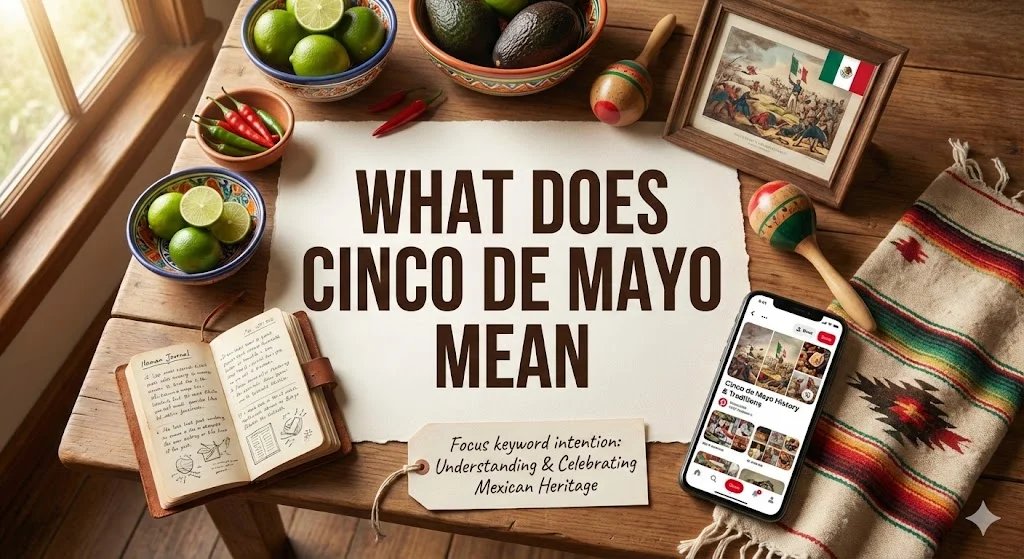
You’ve probably heard of Cinco de Mayo, seen colorful celebrations, tacos, music, and parties, and maybe even joined in. But have you ever stopped to ask, what does Cinco de Mayo mean?
Many people assume it’s Mexico’s Independence Day. That’s a common myth. In reality, Cinco de Mayo has a very specific historical meaning rooted in Mexican pride and resilience. Understanding its true meaning helps you appreciate the culture beyond food and festivals.
In this article, we’ll break down the Cinco de Mayo meaning, its history, why it matters, how it’s celebrated today, and why it’s often misunderstood—especially outside Mexico. Everything is explained in simple, easy language for students, social media users, and curious readers alike.
Definition & Meaning of Cinco de Mayo
Cinco de Mayo is a Spanish phrase that literally means “Fifth of May.” It refers to May 5th, a significant date in Mexican history.
However, the meaning goes much deeper than just a calendar date.
What Cinco de Mayo Actually Means
Cinco de Mayo commemorates the Mexican victory over the French army at the Battle of Puebla on May 5, 1862.
At that time:
- France had one of the strongest armies in the world.
- Mexico was financially struggling and militarily weaker.
- Against all odds, Mexican forces defeated the French.
This victory became a symbol of:
- National pride
- Resistance
- Unity
- Strength against oppression
Key Takeaways
- Cinco de Mayo ≠ Mexican Independence Day
- It honors a specific military victory
- It represents Mexican resilience and courage
Background & Historical Context
To fully understand what does Cinco de Mayo mean, we need to look at the history behind it.
The Situation in Mexico (1860s)
In the early 1860s:
- Mexico was recovering from internal conflicts.
- The country owed money to European nations.
- France, led by Napoleon III, decided to invade Mexico.
France aimed to:
- Expand its influence in the Americas.
- Establish a monarchy in Mexico.
The Battle of Puebla
On May 5, 1862, near the city of Puebla:
- Around 4,000 Mexican soldiers faced 8,000 French troops.
- The Mexican army was poorly equipped.
- Despite the odds, Mexico won.
This victory shocked the world.
Although France later occupied Mexico, the Battle of Puebla became a lasting symbol of resistance and hope.
Is Cinco de Mayo Mexico’s Independence Day?
This is one of the most common questions—and misconceptions.
The Truth
- Mexican Independence Day is celebrated on September 16.
- It marks Mexico’s independence from Spain in 1810.
- Cinco de Mayo is not about independence.
Why the Confusion Exists
- Cinco de Mayo is heavily celebrated in the United States.
- Commercialization blurred its historical meaning.
- Many people outside Mexico weren’t taught the full history.
Simple Comparison
| Event | Date | Meaning |
|---|---|---|
| Mexican Independence Day | September 16 | Freedom from Spain |
| Cinco de Mayo | May 5 | Victory over France |
Why Cinco de Mayo Is Important
Cinco de Mayo is important because it symbolizes more than a battle.
Cultural Significance
- Represents standing up against powerful forces
- Shows the importance of national unity
- Celebrates Mexican identity
Symbolic Meaning
Even though it was a single battle, it showed:
- Courage can defeat strength.
- Determination matters.
- Pride in cultural heritage.
This symbolism is why Cinco de Mayo continues to be remembered.
How Cinco de Mayo Is Celebrated in Mexico
Contrary to popular belief, Cinco de Mayo is not a major national holiday across all of Mexico.
Where It’s Mostly Celebrated
- Puebla (the main location)
- Nearby regions
Common Celebrations in Puebla
- Military parades
- Battle reenactments
- Cultural festivals
- Traditional music and dance
In most parts of Mexico, it’s a regular workday.
How Cinco de Mayo Is Celebrated in the United States
In the U.S., Cinco de Mayo has grown into a large cultural celebration.
Why It’s Big in the U.S.
- Mexican-American communities embraced it.
- It became a celebration of Mexican heritage.
- Businesses promoted it widely.
Common U.S. Celebrations
- Festivals and parades
- Mexican food and drinks
- Music and dancing
- Cultural education events
While festive, it’s important to respect its origins.
Cinco de Mayo in Social Media & Pop Culture
Today, Cinco de Mayo is everywhere online.
Social Media Trends
- Hashtags like #CincoDeMayo
- Festive photos and reels
- Food and drink posts
Important Reminder
Celebration is fine, but:
- Avoid stereotypes
- Respect Mexican culture
- Know the meaning behind the holiday
Professional & Educational Context
In schools and professional settings, Cinco de Mayo is discussed differently.
Education
- Taught as a historical event
- Focus on global politics and resistance
- Used to discuss Mexican history
In Workplaces
- Cultural appreciation events
- Educational presentations
- Inclusive celebrations
Always keep it respectful and informative.
Common Myths About Cinco de Mayo
Let’s clear up the biggest myths.
Myth 1: It’s Mexican Independence Day
False.
Myth 2: It’s Celebrated Everywhere in Mexico
Not true.
Myth 3: It’s Just About Parties
It has deep historical meaning.
Understanding these myths helps avoid cultural misunderstanding.
Cinco de Mayo vs Similar Cultural Holidays
| Holiday | Country | Meaning |
|---|---|---|
| Cinco de Mayo | Mexico | Battle victory |
| Independence Day | Mexico | Freedom from Spain |
| Bastille Day | France | French Revolution |
| July 4th | USA | Independence |
Each holiday has its own unique significance.
Cinco de Mayo in Modern Times
Today, Cinco de Mayo serves as:
- A reminder of Mexican strength
- A cultural celebration abroad
- An educational opportunity
It continues to evolve with modern culture.
FAQs About Cinco de Mayo
Q1: What does Cinco de Mayo mean in English?
It means “Fifth of May.”
Q2: Is Cinco de Mayo a federal holiday in Mexico?
No, except in Puebla.
Q3: Why is Cinco de Mayo popular in the U.S.?
It celebrates Mexican-American culture.
Q4: Was the Battle of Puebla a final victory?
No, but it was symbolically important.
Q5: How can I celebrate respectfully?
Learn the history and appreciate the culture.
Conclusion
So, what does Cinco de Mayo mean? It marks Mexico’s unexpected victory over French forces at the Battle of Puebla on May 5, 1862. While often misunderstood as Mexico’s Independence Day, it actually represents resilience, courage, and national pride. Today, it’s widely celebrated—especially in the United States—as a cultural event honoring Mexican heritage. Understanding its true meaning allows us to celebrate with respect, awareness, and appreciation rather than assumptions. When you enjoy Cinco de Mayo, remember the history behind the colors, music, and festivities.
Discover More:-
- What Does Deku Mea? | Definition, Origins & Usage
- What Does the Color Blue Mean: Symbolism, Psychology & Usage