If you’ve ever browsed a liquor store or sipped whiskey at a bar, you might have noticed bottles labeled “Bottled in Bond”. But what does it really mean? Is it a marketing gimmick, or does it tell you something important about the whiskey inside?
For both beginners and whiskey enthusiasts, understanding bottled in bond is essential—it’s a symbol of quality, regulation, and tradition. In this article, we’ll explore the history, definition, regulations, and practical meaning of bottled in bond. By the end, you’ll know how to choose the right bottles confidently and impress friends with your whiskey knowledge.
Definition & Meaning of Bottled in Bond
Bottled in Bond is a legally regulated label in the United States, primarily for bourbon and other American whiskeys.
Key Points:
- Introduced in 1897 under the Bottled-in-Bond Act of 1897.
- Ensures the whiskey meets strict government standards for quality and authenticity.
- Signals 100 proof (50% alcohol by volume) and a specific aging process.
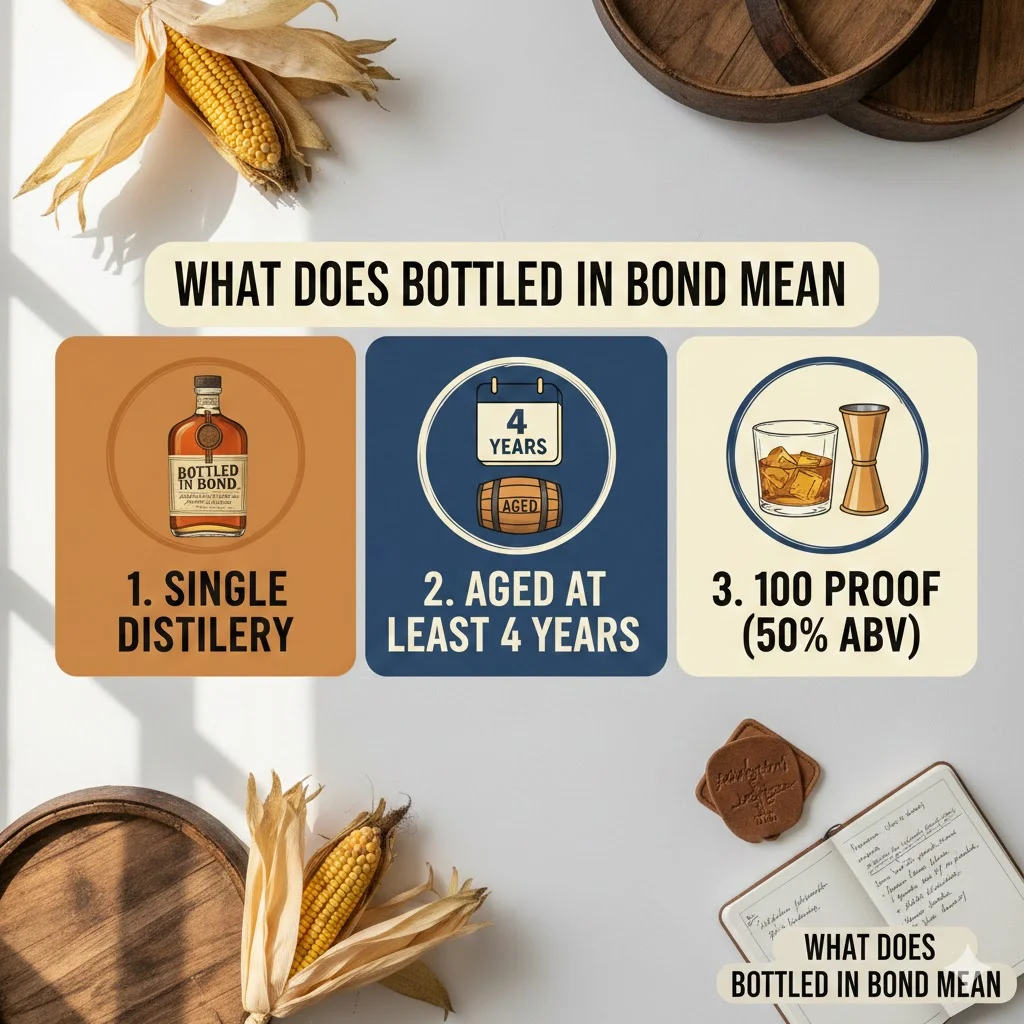
Requirements for a Whiskey to be Bottled in Bond:
- Must be the product of one distillation season (either January–June or July–December).
- Produced by one distiller at one distillery.
- Aged for at least 4 years in a federally bonded warehouse.
- Bottled at exactly 100 proof (50% ABV).
- The label must clearly state the distillery and location.
Example:
“This bourbon is Bottled in Bond, distilled in summer 2019 at XYZ Distillery, aged 4 years, 100 proof.”
Why It Matters:
- Consistency: You know exactly what you’re getting.
- Quality Assurance: Bonded whiskey is legally monitored, so it’s less likely to be adulterated.
- History & Tradition: Connects you to classic American whiskey standards.
Background & History of Bottled in Bond
The term bottled in bond dates back to the late 19th century, a time when whiskey fraud was common. Unscrupulous distillers often watered down or adulterated their products.
- Bottled-in-Bond Act of 1897: Signed into law to protect consumers.
- Government oversight: Bonded warehouses were established, under federal supervision.
- Cultural significance: Became a mark of trustworthy, high-quality American whiskey.
Interesting Fact:
Many classic bourbon brands, including Old Forester and Heaven Hill, still release Bottled-in-Bond editions to honor tradition and assure quality.
How Bottled in Bond Works
Bottled in Bond whiskey is carefully monitored throughout production.
- Single Distillation Season: Ensures uniformity.
- Federal Bonded Warehouse: Provides controlled aging conditions under government supervision.
- Aging: Minimum 4 years, often longer for premium releases.
- Bottling Proof: Always 100 proof, which gives bold flavor and consistent alcohol content.
Dialogue Example:
Sam: “I see ‘Bottled in Bond’ on this bottle. Does that mean it’s better?”
Alex: “Not necessarily better, but it’s guaranteed to be authentic, 100 proof, and aged properly.”
Usage in Whiskey Types
Bottled in Bond is most commonly associated with bourbon, but other American whiskeys can also qualify.
Types & Examples:
- Bourbon: Jim Beam Bottled in Bond, Old Forester Bottled in Bond
- Rye Whiskey: Rittenhouse Rye Bottled in Bond
- Corn Whiskey & Blended Whiskeys: Rare but possible
Key Takeaway:
While most consumers see Bottled in Bond as a bourbon term, it’s technically a legal designation that applies to multiple American whiskey types.
Professional vs Casual Understanding
In casual conversations, you might hear:
- “Bottled in Bond = strong and reliable whiskey.”
In professional or tasting circles:
- It signals quality control, authenticity, and historical adherence.
- Bartenders, sommeliers, and collectors value these bottles for consistency.
Safe Tips for Professionals:
- Reference Bottled in Bond when discussing whiskey with colleagues or clients.
- Avoid overgeneralizing; not all high-quality whiskeys are bottled in bond.
Hidden or Misunderstood Meanings
Bottled in Bond does not necessarily mean:
- Higher price
- Superior taste compared to non-bonded whiskeys
It’s a legal standard, not a flavor rating.
Misunderstanding Example:
Customer: “Is this the best whiskey on the shelf?”
Bartender: “It’s authentic and 100 proof, but taste depends on personal preference.”
How to Choose Bottled in Bond Whiskey
Tips for Buyers:
- Check the distillery and season on the label.
- Verify proof and age requirements.
- Compare price vs. quality; bottled in bond can be budget-friendly or premium.
- Consider tasting notes: vanilla, caramel, oak, and spice are common.
Buying Example:
“I prefer Old Forester Bottled in Bond because it’s 100 proof, 4 years aged, and has consistent flavor.”
Regional & Cultural Differences
While Bottled in Bond is a US legal standard, international audiences often encounter it differently.
- US: Strictly regulated, official meaning.
- Europe & Asia: Seen as a quality signal, but rules may not apply.
- Collectors: Value original bonded whiskey for authenticity and history.
Comparison With Similar Whiskey Labels
| Label | Meaning | Proof | Notes |
|---|---|---|---|
| Bottled in Bond | Legally regulated, single distillery & season | 100 proof | Authenticity & consistency |
| Small Batch | Blended from a small number of barrels | Variable | Focused on flavor profile |
| Single Barrel | From one barrel | Variable | Unique flavor, varies by barrel |
| Straight Whiskey | Aged minimum 2 years | Minimum 40% ABV | Can be blended, not necessarily bonded |
FAQs
Q1: Is Bottled in Bond stronger than regular whiskey?
A: Typically yes, it’s always 100 proof (50% ABV).
Q2: Does Bottled in Bond mean better taste?
A: Not necessarily; it guarantees authenticity and aging, not flavor preference.
Q3: Can any whiskey be bottled in bond?
A: Only American whiskeys that meet legal requirements.
Q4: How do I read the label?
A: Check distiller, distillation season, age, and proof.
Q5: Are Bottled in Bond whiskeys expensive?
A: Prices vary; some are affordable, while premium editions cost more.
Conclusion
Bottled in Bond is more than just a label—it’s a symbol of tradition, authenticity, and quality control in American whiskey. Introduced over a century ago to protect consumers, it ensures the whiskey is 100 proof, aged at least 4 years, and produced under strict federal supervision. While it doesn’t automatically guarantee superior taste, it’s a reliable indicator of authenticity and consistency. Whether you’re a casual drinker or a whiskey connoisseur, understanding this term helps you make informed choices, appreciate the craftsmanship, and enjoy whiskey confidently. Look for the label next time you’re shopping—it tells a story worth knowing.