Have you ever looked at your car tires and noticed a string of numbers and letters on the sidewall? Most drivers ignore them, but these numbers are crucial for safety, performance, and tire selection.
In this guide, we’ll explain what the numbers on a tire mean, including width, aspect ratio, construction type, load index, and speed rating. Whether you’re buying new tires, checking replacements, or just curious, this article will make everything easy to understand.
Understanding Tire Numbers & Letters
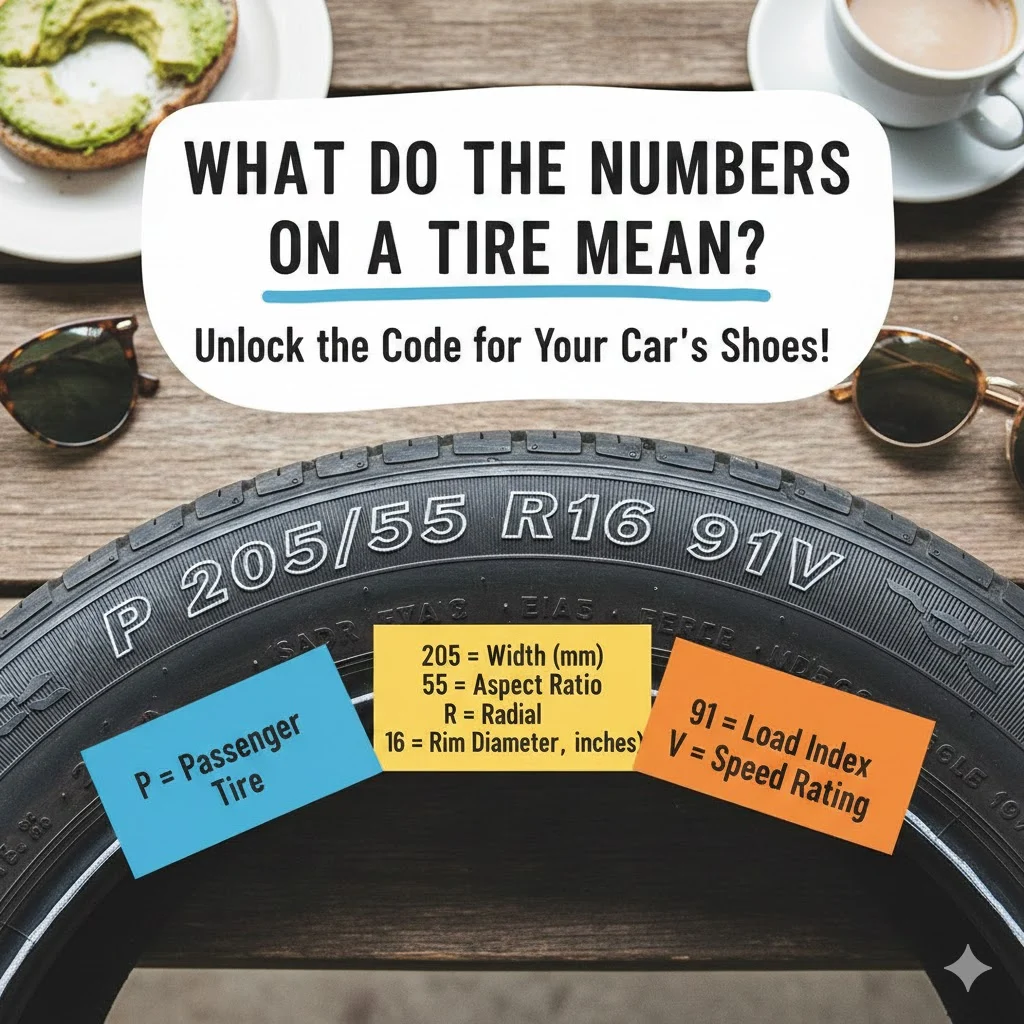
A typical tire marking looks like this: P215/65R15 95H. Each part tells you something important.
Breakdown:
- P – Tire type (Passenger vehicle)
- 215 – Tire width in millimeters
- 65 – Aspect ratio (height to width ratio)
- R – Radial construction
- 15 – Rim diameter in inches
- 95 – Load index (how much weight the tire can carry)
- H – Speed rating (maximum safe speed)
Example in Use:
You see a tire marked P195/60R16 89T. That tells you:
- 195 mm wide
- 60% aspect ratio
- Radial
- Fits 16-inch rims
- Load index 89
- Max speed T (118 mph)
Key Points:
- Always check tire numbers before purchasing.
- Wrong size affects safety, handling, and fuel efficiency.
Tire Width Explained
The first number (e.g., 215) is the width in millimeters from sidewall to sidewall.
Tips:
- Wider tires = more contact with the road, better grip.
- Narrow tires = better fuel efficiency and easier handling in snow or rain.
Visual Table:
| Width (mm) | Usage | Notes |
|---|---|---|
| 185-195 | Compact cars | Efficient, good for city driving |
| 205-225 | Sedans & SUVs | Balanced performance & comfort |
| 235+ | Sports cars | Maximum grip, sporty handling |
Aspect Ratio (Profile)
The aspect ratio (e.g., 65) is the height of the tire sidewall as a percentage of the width.
Example:
215/65 → height = 65% of 215 mm = 139.75 mm
Impact:
- Higher aspect ratio = softer ride, better shock absorption
- Lower aspect ratio = sportier handling, stiffer ride
Discover More:-
See More: What Does IG Mean? The Complete Guide to Every Meaning of “IG” in Texting, Slang, and Social Media
See More: What Does ISTG Mean? The Complete Guide to This Popular Texting Slang
Also Review: What Does ETA Mean in Text? | ETA Meaning, Examples & How to Use It ⏰
Construction Type
The R stands for Radial construction, the most common type today.
Other types:
- D – Diagonal or bias-ply
- B – Belted bias
Radial tires are preferred for:
- Long-lasting durability
- Better fuel efficiency
- Smooth ride
Rim Diameter
The number after construction type (e.g., 15) shows rim diameter in inches.
Importance:
- Must match your car’s wheels exactly.
- Wrong diameter = improper fit, unsafe handling
Load Index
The load index number (e.g., 95) indicates how much weight a single tire can support.
Example Table:
| Load Index | Max Load (kg) | Vehicle Type |
|---|---|---|
| 85 | 515 | Small cars |
| 91 | 615 | Mid-size cars |
| 100 | 800 | SUVs & trucks |
Speed Rating
The speed rating letter (e.g., H) shows the maximum safe speed for that tire.
Common Ratings:
| Letter | Max Speed (mph) | Max Speed (km/h) |
|---|---|---|
| Q | 99 | 160 |
| S | 112 | 180 |
| H | 130 | 210 |
| V | 149 | 240 |
| W | 168 | 270 |
Note: Driving above this speed may risk tire failure.
When to Check Tire Numbers
- Buying new tires – ensure proper size and rating
- Replacing worn tires – match load index & speed rating
- Seasonal changes – summer vs winter tires
- Vehicle upgrade – new rims or suspension
Tip: Your car manual lists recommended tire numbers for safety.
How Numbers Affect Performance
- Width & aspect ratio: Handling, traction, comfort
- Load index: Safety under weight load
- Speed rating: Stability at high speeds
- Construction & rim diameter: Longevity & fit
Example:
Sports car = wide, low-profile tires, high speed rating
SUV = moderate width, higher aspect ratio, higher load index
Common Tire Number Mistakes
- Choosing tires too wide for the rim → rubbing or poor handling
- Ignoring load index → risk under heavy load
- Mismatching speed rating → unsafe driving
Pro Tip: Always verify numbers against manufacturer recommendations.
Regional & Seasonal Differences
- US vs Europe: Tire width and speed ratings may vary slightly due to standards
- Winter tires: Higher aspect ratio and softer compound
- Summer tires: Lower aspect ratio for better handling and grip
FAQs
Q1: What does P in tire numbers mean?
A: Passenger car tire; LT = light truck, T = temporary spare.
Q2: Can I mix tires with different speed ratings?
A: Not recommended; it affects stability and handling.
Q3: How often should I check tire numbers?
A: Every tire replacement or seasonal change.
Q4: Do tire numbers change with aftermarket rims?
A: Yes, rims must match diameter exactly.
Q5: Is aspect ratio important for comfort?
A: Yes, higher ratios = softer ride, lower = sportier.
Q6: Can load index affect fuel efficiency?
A: Slightly; higher load index tires may weigh more.
Conclusion
Understanding what the numbers on a tire mean is essential for safety, performance, and vehicle longevity. These numbers tell you everything from tire width and height to load capacity and speed limits. Knowing them helps you choose the right tires, avoid accidents, and get the best driving experience. Next time you shop for tires or check your car, take a moment to read the sidewall numbers—you’ll be making smarter, safer decisions for your vehicle and your passengers.