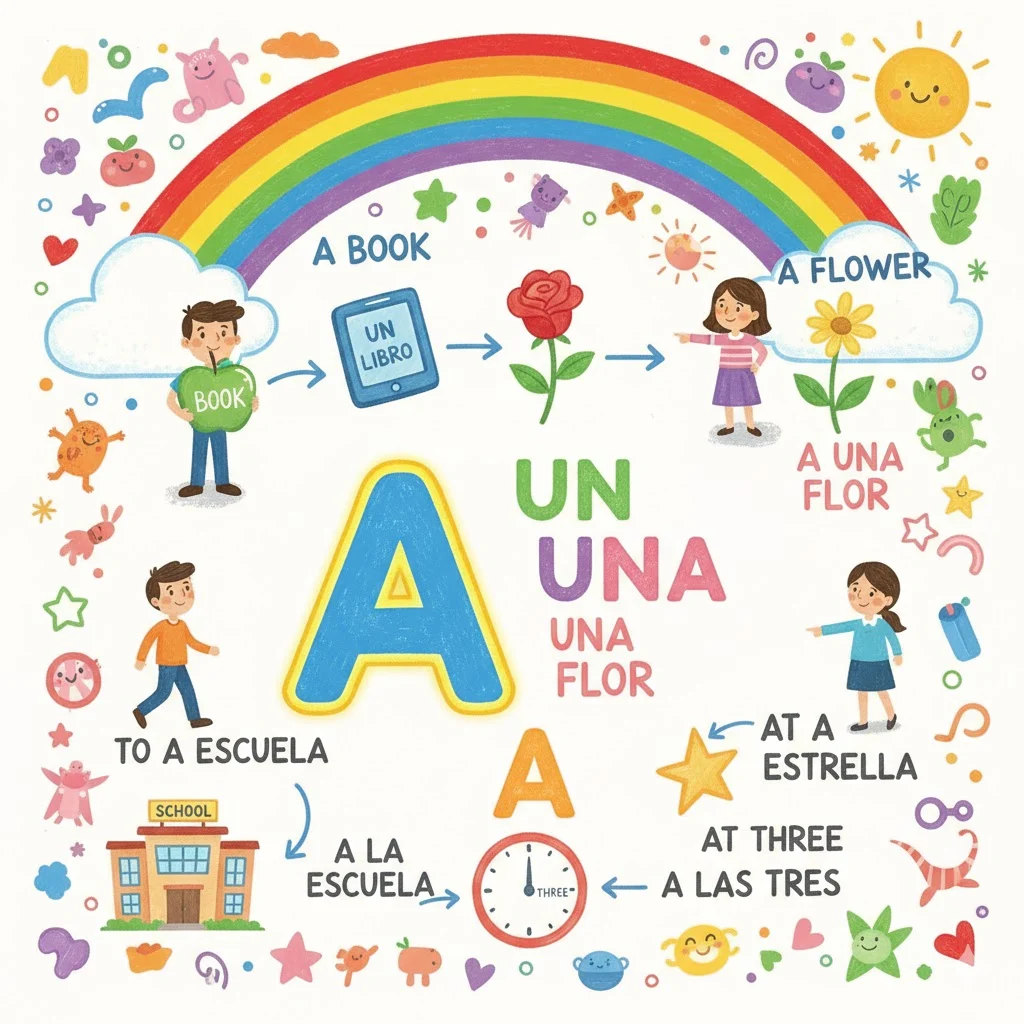
Are you learning Spanish and often get confused about how to say “a” in Spanish? You’re not alone! Many beginners struggle with articles, prepositions, and context. This guide is perfect for students, travelers, and language enthusiasts who want to speak Spanish confidently. We’ll break down everything about “a,” provide examples, common mistakes, and practice exercises so you can use it correctly in real conversations.
Understanding “A” in English
Before learning Spanish, it helps to understand what “a” means in English.
- “A” is an indefinite article used before singular nouns.
- Examples:
- A dog – any dog, not a specific one
- A house – one house among many
It’s important to note that English “a” does not change with gender or number, but Spanish does.
How to Say “A” in Spanish
In Spanish, “a” can be translated in two main ways depending on usage:
1. As an Indefinite Article: Un / Una
When “a” is used before a singular noun, Spanish uses un or una.
| Article | Gender | Example | Translation |
|---|---|---|---|
| Un | Masculine | un coche | a car |
| Una | Feminine | una flor | a flower |
Rule: Always match the article with the noun’s gender.
More Examples:
- Un amigo – a friend (male)
- Una amiga – a friend (female)
- Un libro interesante – an interesting book
- Una película nueva – a new movie
2. As a Preposition: A
Sometimes, “a” in Spanish is not an article but a preposition, meaning “to” or “at”.
- Voy a la escuela. – I am going to the school.
- Llamé a mi hermano. – I called my brother.
- Entramos a la casa. – We entered the house.
Tip: Use a before people when they are the direct object of a verb:
- Correct: Veo a María. – I see María.
- Incorrect: Veo María.
Un vs Una: A Gender Guide
Spanish nouns have gender, which determines which article to use.
- Masculine nouns → Un
- Feminine nouns → Una
Masculine Examples
- Un perro – a dog
- Un coche – a car
- Un profesor – a teacher
Feminine Examples
- Una mesa – a table
- Una silla – a chair
- Una estudiante – a student
Quick Tip: Most nouns ending in -o are masculine and -a are feminine, but watch out for exceptions.
Using “A” Before People
In Spanish, when the direct object of a verb is a person, you usually use a:
- Conozco a Juan. – I know Juan.
- Escucho a la profesora. – I listen to the teacher.
This is called the “personal a”. It is unique to Spanish and has no exact English equivalent.
Common Mistakes Beginners Make
- Confusing un/una and a
- Remember: un/una = “a” (article), a = “to/at” (preposition).
- Gender mistakes
- Wrong: un casa
- Correct: una casa
- Omitting the personal a
- Wrong: Veo María
- Correct: Veo a María
- Plural confusion
- “A” becomes unos / unas for plural indefinite articles:
- Unos amigos – some friends
- Unas flores – some flowers
- “A” becomes unos / unas for plural indefinite articles:
Examples in Everyday Conversations
- Ordering food:
- Quiero una pizza. – I want a pizza.
- Talking about people:
- Conozco a un amigo en España. – I know a friend in Spain.
- Giving directions:
- Vamos a la tienda. – Let’s go to the store.
- Describing objects:
- Necesito un bolígrafo. – I need a pen.
Quick Practice Exercises
Translate these sentences into Spanish:
- I bought a book.
- She is going to the market.
- I saw a teacher.
- I have a friend.
- We are entering a house.
✅ Answers:
- Compré un libro.
- Ella va al mercado.
- Vi a un profesor.
- Tengo un amigo.
- Entramos a una casa.
Tips to Remember “A” in Spanish
- Un/Una = indefinite article → matches gender
- A = preposition → usually before verbs or directions
- Use the personal a when talking about people
- Plural: unos / unas → some
Practice with daily objects, people, and actions to make it natural.
Conclusion
Learning how to say “a” in Spanish is easier than it seems. With un, una, and a, you can start forming simple sentences correctly. Remember: gender matters, context matters, and practice is the key to fluency. Soon, you’ll use “a” naturally in your conversations.