Stories sit at the center of how humans think. They teach lessons, sell ideas, entertain audiences, and shape culture. Now, AI story generators have stepped into that creative space. They don’t replace imagination. They amplify it.
If you’ve ever wondered how an AI story generator actually works, whether AI-written stories are original, or how writers use these tools without sounding robotic, this guide covers everything. No fluff. No vague claims. Just clear, real-world insight written for humans.
What Is an AI Story Generator?
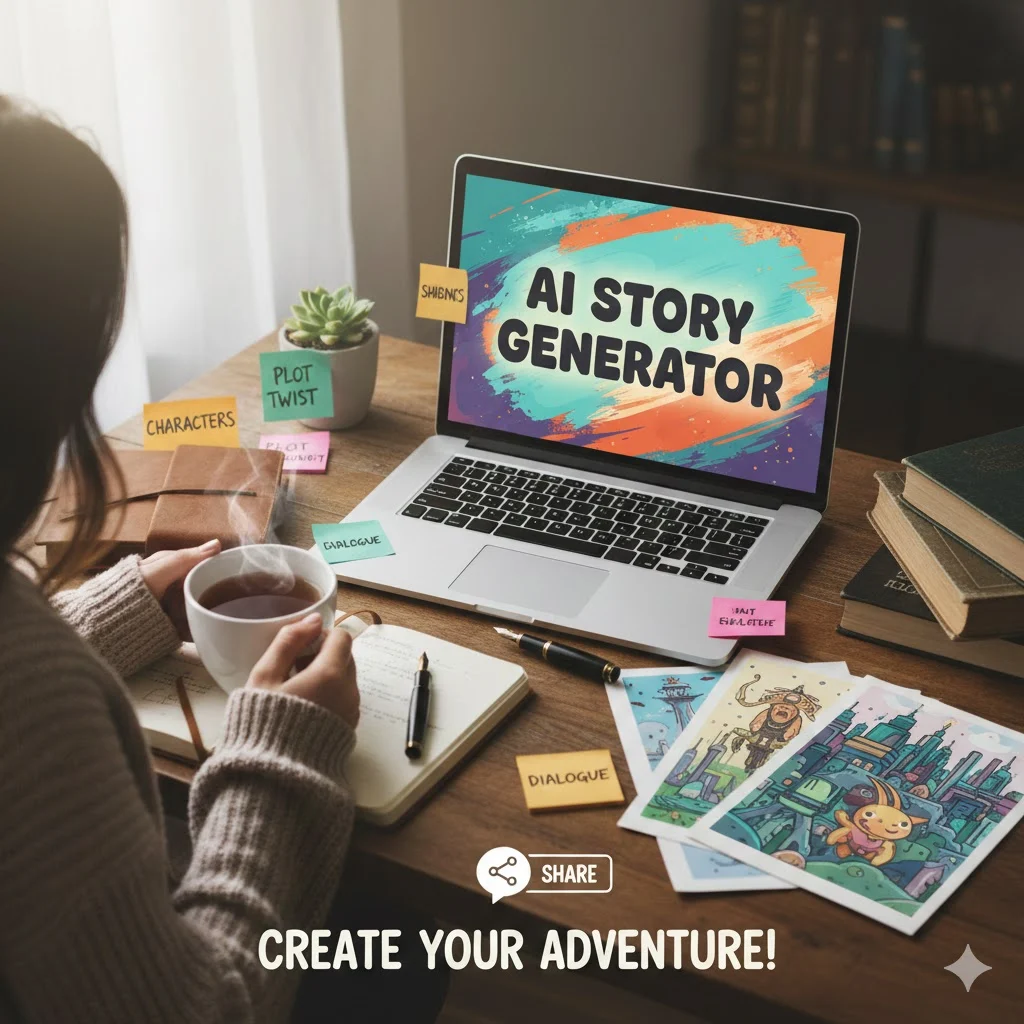
An AI story generator is a software tool that uses artificial intelligence to create stories from prompts, keywords, or structured inputs. You give the AI direction. It writes narrative text that follows characters, plots, and themes.
Unlike basic text generators, modern AI storytelling tools understand:
- Story structure
- Genre conventions
- Character continuity
- Tone and pacing
That difference matters.
How AI Story Generators Differ From Simple AI Writing Tools
Not all AI writing tools tell stories well. A true AI fiction generator focuses on narrative logic instead of surface-level text.
| Feature | AI Story Generator | General AI Writing Tool |
|---|---|---|
| Plot development | Strong | Weak or inconsistent |
| Character memory | Present | Often missing |
| Genre awareness | High | Limited |
| Dialogue handling | Natural | Often stiff |
| Long-form storytelling | Designed for it | Not optimized |
An artificial intelligence story generator doesn’t just string sentences together. It models how stories unfold.
How an AI Story Generator Works Behind the Scenes
Understanding how these tools function helps you use them better. The process feels simple. The technology underneath is not.
Language Models Power AI Story Generators
Most modern AI story generators rely on large language models, often called LLMs. These models analyze massive datasets of text and learn patterns in language.
They don’t “know” stories.
They predict what comes next.
That prediction happens using probabilities learned from millions of narrative examples.
Training Data Shapes Storytelling Ability
AI story generators train on:
- Fiction books
- Short stories
- Screenplays
- Mythology
- Public narrative text
This exposure teaches the AI how stories usually flow.
For example:
- Conflicts rise before climaxes
- Dialogue alternates between speakers
- Fantasy worlds need internal rules
The AI internalizes those patterns.
Prompt-Based Generation Explained
The prompt is the steering wheel.
A vague prompt leads to generic stories.
A detailed prompt produces sharper results.
Example:
Weak prompt:
Write a fantasy story.
Strong prompt:
Write a fantasy short story about a young mapmaker who discovers a living city that shifts every night.
The second prompt gives direction without boxing the AI in.
Iteration and Refinement
Most AI story writers don’t stop after one output.
Writers often:
- Generate a rough draft
- Ask for rewrites
- Expand scenes
- Tighten dialogue
AI excels at iteration. Humans excel at judgment.
Can an AI Story Generator Write Stories That Actually Make Sense?
Yes. But with conditions.
AI handles structure well. It struggles with emotional depth without guidance.
Where AI Story Generators Perform Strongly
AI storytelling shines in these areas:
- Story ideas and brainstorming
- Plot outlines
- Genre-based writing
- Dialogue drafts
- World-building concepts
AI can generate ten plot twists faster than a human can think of one.
Where AI Still Falls Short
AI story generators struggle with:
- Deep emotional nuance
- Long-term character growth
- Subtle symbolism
- Original metaphors
These gaps explain why the best results come from collaboration.
Are AI-Generated Stories Original?
This question matters. Especially for commercial use.
How AI Story Generators Produce Original Text
AI does not retrieve stories from a database. It generates new text based on learned patterns.
Each output is statistically unique.
That said, originality improves when you:
- Use custom prompts
- Rewrite sections
- Add personal voice
Raw AI output is a draft. Not a finished artifact.
Copyright and Ownership
Most modern AI story generator software allows users to own generated content. However, ownership depends on platform terms.
General rules apply:
- Personal use is almost always allowed
- Commercial rights vary by provider
- Editing AI output strengthens ownership claims
Always treat AI as a co-writer, not a replacement.
Is Using an AI Story Generator Ethical?
Ethics depend on intent and transparency.
Using AI to:
- Brainstorm ideas
- Improve productivity
- Learn storytelling
is widely accepted.
Problems arise when:
- AI work is misrepresented
- Academic rules are violated
- Creative credit is obscured
Responsible use keeps creativity honest.
Types of AI Story Generators Based on Use Case
Different goals require different tools. One size never fits all.
AI Short Story Generators
These tools focus on concise narratives.
Best for:
- Writing practice
- Flash fiction
- Daily prompts
They emphasize speed and clarity.
AI Story Generators for Novels
Long-form storytelling introduces challenges.
AI struggles with:
- Consistency across chapters
- Character memory
- Subplot management
Successful novelists use AI for:
- Chapter drafts
- Scene expansions
- Plot repair
Genre-Specific AI Story Generators
Genre-aware AI produces better stories.
Fantasy AI Story Generators
- Magic systems
- World lore
- Epic arcs
Horror AI Story Generators
- Suspense pacing
- Psychological tension
- Atmosphere control
Romance AI Story Generators
- Emotional dialogue
- Relationship arcs
- Conflict resolution
Sci-Fi AI Story Generators
- Speculative concepts
- Technology-driven plots
- Ethical dilemmas
Genre input improves results dramatically.
AI Story Generator for Kids
Children’s storytelling requires care.
High-quality AI story generators for kids include:
- Age-appropriate language
- Positive moral framing
- Clear story arcs
Parents and educators use these tools for:
- Reading practice
- Creative exercises
- Bedtime stories
Human supervision still matters.
What Makes the Best AI Story Generator?
Not all tools deserve the title.
Key Evaluation Criteria
| Factor | Why It Matters |
|---|---|
| Prompt control | Guides creativity |
| Genre support | Improves relevance |
| Story coherence | Prevents nonsense |
| Editing features | Saves time |
| Output ownership | Enables publishing |
Avoid tools that hide limits or pricing.
Free vs Paid AI Story Generators
Free tools work well for experimentation.
Paid tools offer:
- Longer outputs
- Memory features
- Advanced controls
Upgrading makes sense if storytelling is a core task.
AI Story Generator Free Without Signup: What to Expect
These tools exist. They also come with trade-offs.
Common limitations include:
- Short word counts
- Limited edits
- No saving history
They’re ideal for testing ideas. Not for production work.
How Writers Use AI Story Generators Without Losing Their Voice
This matters more than speed.
AI as a Brainstorming Partner
Writers often ask AI for:
- Plot twists
- Character backstories
- Scene alternatives
The writer chooses what survives.
AI for Structural Drafting
AI excels at structure.
Many writers:
- Outline chapters manually
- Use AI to draft scenes
- Rewrite everything afterward
This preserves voice while saving time.
Editing AI Output Like a Professional
Strong editing transforms AI drafts.
Focus on:
- Tightening dialogue
- Adding emotional cues
- Adjusting rhythm
AI drafts are clay. Humans sculpt.
AI Story Generator Use Cases Beyond Fiction
Storytelling extends beyond novels.
Content Creation and Marketing
Brands use AI storytelling for:
- Origin stories
- Campaign narratives
- Brand messaging
Story-driven marketing converts better.
YouTube Scripts and Podcasts
AI helps create:
- Episodic content
- Narrative hooks
- Story-based intros
Creators still control tone.
Games and Interactive Storytelling
Game developers use AI for:
- NPC dialogue
- Quest narratives
- Branching choices
AI speeds iteration cycles.
Screenplays and Visual Media
AI assists with:
- Scene drafts
- Dialogue testing
- Storyboarding ideas
Final scripts still require human polish.
How to Use an AI Story Generator Effectively
Skill matters more than software.
Writing Better Prompts
Effective prompts include:
- Genre
- Perspective
- Tone
- Conflict
Example Prompt Structure:
- Who is the protagonist
- What do they want
- What stands in the way
Clarity improves output.
Avoiding Common Mistakes
Common pitfalls include:
- Overusing raw output
- Skipping edits
- Relying on clichés
AI improves speed. Not taste.
Can AI Replace Human Writers?
No.
AI lacks:
- Lived experience
- Emotional intuition
- Cultural nuance
AI supports writers. It doesn’t replace them.
The best storytelling remains human-led.
The Future of AI Story Generators
Storytelling tools continue to evolve.
Expected developments include:
- Multimodal stories with images
- Personalized narratives
- Interactive AI fiction
AI storytelling will become more collaborative, not autonomous.
Frequently Asked Questions About AI Story Generators
Can AI write a full novel?
Yes. With human oversight and editing.
Are AI stories original?
Yes. Especially when customized and revised.
Is AI storytelling safe for kids?
With supervision and age filters, yes.
Do AI story generators cost money?
Many offer free tiers. Premium features vary.
Final Thoughts on Using an AI Story Generator
An AI story generator works best as a creative amplifier. It speeds drafting. Expands ideas. It reduces friction.
But stories still need human judgment.
When you combine AI’s speed with human insight, storytelling becomes faster, richer, and more flexible. That balance defines the future of creative writing.
Use AI wisely. Write boldly. Edit ruthlessly.